

Last Updated on June 15, 2026
Everything You Need to Know About Microchipping Your Pet
At PawBoost, we see firsthand the heartbreak that comes when a beloved companion disappears, and the overwhelming joy when they are finally reunited with their families. According to research published in the Journal of the AVMA, every year, an estimated 10 million dogs and cats are lost or stolen across the United States, and one of the most effective ways to protect your pet is through microchipping.
That’s why we’ve created this comprehensive guide to help you understand everything about pet microchips: how they work, how much they cost, and why this tiny piece of technology could be the key to bringing your furry friend home safely.
What Is a Pet Microchip
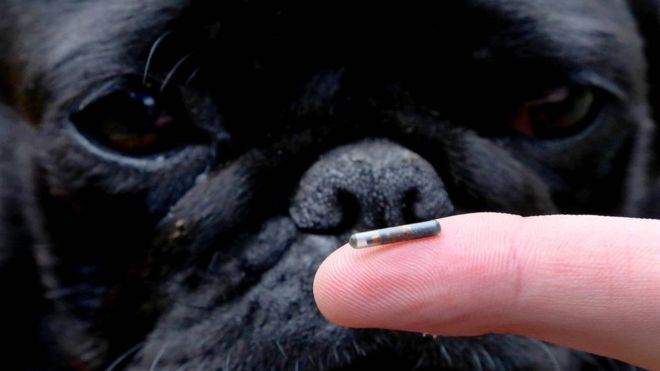
A microchip, also known as a “transponder,” is a tiny electronic device about the size of a grain of rice that is implanted under a pet’s skin, typically between the shoulder blades. It stores a unique identification number that can be read by a specialized scanner. Unlike GPS trackers, microchips don’t emit signals or provide real-time location data. They simply serve as a permanent form of identification for your pet.
Think of it as a permanent ID card your pet carries with them wherever they go. Unlike collars and tags, which can fall off, break, or be removed, a microchip stays with your pet for life.
Why It Matters
Poor registration is the #1 reason microchips fail to reunite pets with their owners. According to a study published in the Journal of the AVMA, among microchipped pets that weren’t recovered:
- 42% had never been registered in any database
- 35% had incorrect or outdated contact information on file
- 17% were registered in a different database than the one being searched
Once registered, remember to update your information whenever you move or change phone numbers.
How Microchipping Improves Pet Recovery Rates
The previously mentioned study tracked 7,704 microchipped animals across 53 shelters over an eight-month period, and the results were striking. Microchipped dogs were returned to their owners at a rate of 52%, more than double the 22% rate for dogs without a chip.
The gap is even more dramatic for cats. For microchipped cats, the return-to-owner rate reached 38.5%, Tufts compared to just 1.8% for those without any permanent identification.
At PawBoost, we know that combining a microchip with community alert systems creates the best chance of bringing lost pets home. Our platform works alongside microchipping technology to help spread the word when pets go missing.
How Do Pet Microchips Work?
Understanding how pet microchips work helps you appreciate why this technology is so valuable for pet safety.
Understanding RFID Technology in Pet Identification
Pet microchips work through radio frequency identification, or RFID. This technology uses radio waves to transmit data between two devices:
- A tag that stores information
- A reader that interprets it.
The tag draws power from the electromagnetic field generated by the reader itself, requiring no battery of its own.
In the case of pet microchips, the tag is entirely passive. It doesn’t broadcast any signal or actively send data. It simply holds a unique identification number and remains dormant inside the animal until a compatible scanner passes close enough to read it.
What Information Is Stored on a Microchip?
A common concern among pet owners is how much personal information a microchip actually holds. The answer is straightforward: very little. Current pet microchips store nothing more than a unique identification number. There is no GPS functionality, no location tracking, and no personal data of any kind on the chip itself.
Contact information is kept separate, stored in a pet microchip registry that links the owner’s details to that ID number. This means that if your pet is found and scanned, a shelter or vet can look up the number and reach you through the registry, keeping your personal information private and secure.
Types of Pet Microchips
Pet microchips in the U.S. operate on one of three radio frequencies: 125 kHz, 128 kHz, and 134.2 kHz. The key distinction is whether a chip meets the international standard.
- ISO standard (134.2 kHz): The globally recognized standard, endorsed by the AVMA, AAHA, WSAVA, and ASPCA. ISO chips carry a 15-digit numeric code and can be read by scanners worldwide, making them essential for international travel.
- Non-ISO (125 kHz and 128 kHz): Older frequencies that remain common in the U.S. These chips can only be detected by universal scanners, not by standard forward-reading devices.
Universal scanners, also known as forward- and backward-reading scanners, can detect all three frequencies and are the recommended standard for any shelter or clinic.
If you are unsure which type of chip your pet has, a 15-digit number starting with 9 indicates an ISO-compliant chip. A 9 or 10-digit code suggests a non-ISO chip. When in doubt, ask your vet to confirm.
How to Register a Microchipped Pet
It is incredibly important that you complete the registration process as soon as you have your pet microchipped, as this is the only way the microchip will be effective!
Step by Step Process
- Obtain your microchip number from your vet or shelter
- Visit the manufacturer’s website or a universal registry
- Create an account and enter your contact and pet information
- Verify the registration was completed successfully
We recommend registering your pet’s preprogrammed number and your up-to-date contact information in at least one, and ideally several, of the following registries:
- Pet Chip Registry USA
- My24pet
- National Animal Identification Center
- Pet Key
- 24Petwatch Registry
- AKC Reunite Enrollment
To check which registries a chip is listed in, you can use the AAHA Universal Microchip Lookup Tool, which searches multiple databases at once.

Do Pet Microchips Have GPS?
This is one of the most common misconceptions we encounter. As of today, there are no microchips with built-in GPS, and the reason comes down to how both types of devices work:
- Microchip: It works passively, with no battery. It only transmits a unique identification number when a specialized reader activates it via radio frequency (RFID), with a range of just a few centimeters.
- GPS: It requires a battery, satellite connection, and real-time data transmission. This demands a considerably larger device and constant recharging, something incompatible with an implantable chip the size of a grain of rice.
Then… Can Pet Microchips Be Tracked?
Without a power source, the microchip simply cannot broadcast a signal that would enable real-time tracking. It remains dormant until activated by a scanner. Microchips are identification devices, not tracking devices.
How Microchips Actually Help Reunite Lost Pets
When a lost animal is brought to a veterinary clinic, animal shelter, or rescue center, staff will scan the animal for a microchip. If one is detected, the scanner displays a unique ID number, which is then looked up in a pet microchip registry. If the chip has been properly registered, the registry will return the owner’s contact information, allowing staff to reach out and arrange the reunion.
How Much Does It Cost to Microchip a Pet?
Microchipping a pet in the U.S is surprisingly affordable in 2026.
Average Microchipping Costs Across the U.S.
The cost of microchipping a pet typically falls between $38 and $87, with most owners paying around $48 on average. Where you go will influence the price. While shelters and rescue organizations often offer the procedure at a reduced rate of $20 to $50, sometimes bundled into adoption fees, veterinary clinics generally charge between $40 and $60.
It’s also worth timing your visit strategically. Many clinics run microchipping promotions throughout the year, including discounted or free events during hurricane season and around August 15, National Check the Chip Day.
What’s Included in the Microchipping Fee?
The fee generally covers the chip and the implantation procedure, but registration in a national database is not always included. Registering your chip with the company is usually free. Be sure to ask your veterinarian or shelter what is covered to avoid any surprises.
Does Pet Insurance Cover Microchipping?
Coverage depends on your policy. Most standard pet insurance plans do not include microchipping, but those with a preventive care add-on often do, though usually at a higher premium. Even then, there are limitations to keep in mind: registry fees are frequently excluded, and many insurers require you to pay out of pocket upfront and submit for reimbursement afterward.
If microchipping coverage matters to you, the best approach is to review your plan details carefully or speak directly with your provider before booking the procedure.

Is Microchipping Painful or Unsafe for Your Pet?
Microchipping is a minimally invasive procedure that requires no surgery or anesthesia. The chip is injected beneath the skin using a hypodermic needle, comparable to a standard vaccination in both feel and safety, though the needle is slightly larger than usual. Most pets tolerate it well, with any discomfort passing in a matter of seconds. There is no recovery time needed, and your pet can return to their normal routine immediately after.
That said, it is natural to have concerns. Some pets may wince briefly during the injection, but this is no different from any routine shot. Serious side effects are uncommon. In rare cases, a pet may develop a small hematoma, a localized infection, or a mild foreign body reaction at the injection site. If you notice any swelling, redness, or unusual behavior in the days following the procedure, it is worth contacting your veterinarian.
Overall, the risks associated with microchipping are considered minimal compared to the long-term benefit of having a permanent form of identification for your pet.
Do Pet Microchips Expire?
No, pet microchips do not expire. A microchip is made from biocompatible materials with no moving parts and no power source, meaning there is nothing to wear out or replace. Most chips are designed to last up to 25 years, which for the vast majority of pets means they are a one-time procedure for life.
What can expire, however, is your registration. Some registries charge an annual renewal fee, while others offer lifetime enrollment for a one-time payment. It is worth reviewing the terms of your specific registry to make sure your pet’s information remains active and accessible.
As for the chip itself, the easiest way to confirm it is still functioning is to ask your veterinarian to scan it during a routine checkup. This takes only a few seconds and gives you peace of mind that the chip is detectable and returns the correct ID number. At the same time, use the visit as a reminder to verify that your contact details in the registry are current. A working chip linked to an outdated phone number offers little protection.

Can a Pet Be Microchipped Twice?
It is quite common for a pet to end up with more than one microchip. This typically happens in one of four situations:
- A new owner is unaware that a chip was already implanted at a shelter or by a previous owner
- A shelter inserts a chip without scanning the animal first
- An existing chip has migrated from its original placement and becomes difficult to detect
- International travel requirements call for an ISO-standard chip that differs from the one already in place
In most cases, having two microchips is not harmful. However, it can create confusion if both chips return different ID numbers or are registered to different owners. If you are unsure whether your pet already has a chip, ask your veterinarian to perform a full-body scan before considering a second implant.
If your pet does have more than one chip, the most important step is to make sure every chip is registered with your current contact details. That way, whichever one a scanner picks up will still lead back to you.
When adopting a pet, it is always worth asking a few key questions upfront:
- Is the pet already microchipped?
- What is the microchip number?
- Which registry is the chip enrolled with?
- How do I transfer ownership into my name?
Can Pet Microchips Fail?
While microchips are reliable, they are not infallible. Failures are rare, but there are a few factors that can prevent a chip from being detected:
- The chip itself: In very rare cases, a chip can stop functioning. A large BSAVA study of 3.7 million pets found that true microchip failure and migration each occur in fewer than 1 in 10,000 cases.
- The scanner: Not all scanners read all frequencies. Standard chips operate at 134.2 kHz and work with most modern scanners, but older non-standard chips running at 125 kHz or 128 kHz require a universal scanner to be detected. Shelters or clinics using outdated equipment may miss these entirely.
- Scanning technique: According to Ohio State University’s Indoor Pet Initiative, no scanner achieves 100% sensitivity, making proper technique essential. Staff should scan the entire body, not just the shoulder blades, as chips can migrate over time, particularly in larger or more active dogs.
- The animal: Long or matted fur, excess fat tissue near the implant site, or a metal collar can all interfere with detection.
How to Keep Your Pet’s Chip Functional
The good news is that most issues are preventable with a little routine care:
- Ask your vet to scan the chip at every annual checkup
- Make sure the original implant was performed by an experienced professional
If a chip ever becomes undetectable, consult your vet about next steps before assuming a second implant is needed

Microchipping Best Practices for Pet Parents
A microchip works best as part of a broader identification strategy. We recommend a layered approach:
- ID collar and tags for immediate visual identification
- Microchip as a permanent, tamper-proof backup
- GPS tracker (optional) for real-time location tracking
- PawBoost alert to notify your local community if your pet goes missing
Collars can break and tags can fall off, but a microchip stays with your pet for life. Think of it as the last line of defense if every other form of identification fails.
Annual Microchip Checks
Make microchip scanning a routine part of your pet’s annual vet visit. It only takes a few seconds and confirms that the chip is still functional and hasn’t migrated from its original position.
What to Do If Your Pet Goes Missing
Act quickly and cover as many channels as possible:
- Search your immediate area thoroughly
- Post a lost pet alert on PawBoost to notify neighbors and local community members
- Contact nearby shelters and veterinary clinics to report your pet missing
- Inform your microchip registry that your pet is lost
- Put up flyers in your neighborhood and check online found pet listings regularly
At PawBoost, we work alongside microchip technology to help close the gap between identification and recovery. When you report a missing pet on our platform, nearby neighbors are notified, local businesses are updated, and anyone who has previously found a pet in the area can make an immediate connection.
Frequently Asked Questions About Pet Microchips
Can I track my pet with a microchip?
No. A microchip is an identification device, not a tracking device. It has no battery and cannot broadcast a signal, meaning it cannot provide real-time location data. If you want to track your pet’s location, a GPS collar is the right tool for that. A microchip and a GPS tracker serve different purposes and work best used together.
How long does a pet microchip last?
Most microchips are designed to last up to 25 years, which effectively means a lifetime for the vast majority of pets. The chip has no battery or moving parts, so there is nothing to wear out. What may require attention over time is your registration: some registries charge annual renewal fees, so it is worth checking the terms of yours to make sure your pet’s information stays active.
Is microchipping required by law?
It depends on where you live. Some countries, including the UK and Australia, have made microchipping mandatory for dogs. In the United States, requirements vary by state and municipality. Even where it is not legally required, most shelters, veterinarians, and animal welfare organizations strongly recommend it.
Can microchips cause health problems?
Serious complications are uncommon. In rare cases, a pet may develop a small hematoma, a localized infection, or a mild foreign body reaction at the injection site.
What should I do if I adopt a pet that’s already microchipped?
Start by obtaining the existing microchip number from the shelter or previous owner. Then contact the registry the chip is enrolled with and request a transfer of ownership into your name. It is also worth using the AAHA Universal Microchip Lookup Tool to check whether the chip appears in multiple databases, and update your contact details in each one. If you are unsure whether a transfer was completed successfully, ask your vet to scan the chip at your first visit and verify the registered information.
Comments are closed.