

How to Choose a Tracking Device for Your Pet
There are few feelings worse than realizing your pet is missing. One open gate, one startled dash after a squirrel, and a beloved dog or cat can vanish in seconds. It’s no wonder so many pet parents are turning to tracking devices for peace of mind: roughly 10 million dogs and cats are estimated to go missing every year in the U.S., and being able to see where your pet is, in real time, can turn a frantic all-day search into a quick reunion.
But walk into the world of pet trackers and the choices pile up fast. GPS or Bluetooth? Subscription or no subscription? A collar, a clip-on, or a built-in fence? At PawBoost, we’ve helped reunite millions of lost pets with their families, and we know that the right tracking device, paired with a strong community safety net, gives your pet the best possible protection. This guide breaks down how the technology actually works and what features matter, so you can choose the device that fits your pet and your life.
Why Consider a Pet Tracking Device at All?
A collar with an ID tag and a microchip are still essential, but it’s important to understand what they are: forms of identification, not tracking devices.
- A microchip is a tiny passive chip with no battery, no GPS, and no signal of its own. It simply stores an ID number that links to your contact details, and it only does anything when a person physically finds your pet and has the chip scanned at a vet or shelter.
- An ID tag works the same way: it relies entirely on a stranger finding your pet, reading the tag, and choosing to call you.
Both of these only help after someone has already found your pet and brought them somewhere to be identified. A tracking device flips that around. Because it actively broadcasts a location using GPS or radio, it lets you see where your pet is and go get them yourself, without waiting and hoping that a stranger steps in.
That difference matters most for the pets most likely to roam: escape-artist dogs, outdoor or indoor-outdoor cats, anxious pets prone to bolting from fireworks or thunder, and adventurous animals in rural areas. A tracker doesn’t replace your collar tag or microchip, those remain your pet’s permanent ID and are what get them home if the tracker is ever lost or out of battery. Instead, it adds a real-time layer of protection on top of them.
The Main Types of Pet Tracking Technology
Almost every pet tracker on the market relies on one of three core technologies. Understanding the differences is the single most important step in choosing well, because each is built for a different situation.
GPS Trackers for Pets
GPS (Global Positioning System) trackers are the gold standard for locating a pet that may travel any real distance. The device picks up signals from a network of satellites to calculate its exact position, then sends that location to your phone over a cellular network, usually showing your pet as a live dot moving on a map.
The big advantages are real-time tracking and effectively unlimited range: as long as there’s cellular coverage, you can find your pet whether they’re in the backyard or several towns over. Accuracy is typically within a few feet. The trade-offs are that GPS trackers need battery power for the satellite and cellular connection (so they require regular charging), and because they use a cellular network, most of them require a paid subscription or SIM plan to stay connected.
GPS is the best choice for dogs and cats that go outdoors, anyone in a rural or wide-open area, and any pet whose roaming range could exceed your own line of sight.
Bluetooth Trackers for Pets
Bluetooth trackers are the small, inexpensive tags often marketed for finding keys, wallets, and luggage, and they’re sometimes repurposed for pets. They work by connecting over Bluetooth to your phone within a short range, often somewhere around 100 to 160 feet in ideal conditions. Many also use a “crowd-sourced” network: when another participating phone passes near your tag, it anonymously relays the tag’s location back to you.
The appeal is real: they’re cheap, the battery lasts a long time, and there’s usually no subscription. But there are serious limitations for pets. There’s no real-time tracking, just occasional location snapshots when another phone happens to be nearby. Coverage collapses in rural or sparsely populated areas where few phones pass by. And notably, the makers of these item trackers generally state that their devices aren’t designed to track living things, including pets. A Bluetooth tag can work as a backup near home, but it isn’t a reliable safety net for a pet that actually leaves the area.
Radio Frequency (RF) Trackers for Pets
Radio frequency trackers take a different approach: the collar unit communicates directly with a handheld receiver over radio waves, bypassing cell towers and Wi-Fi entirely. Many of these are aimed at hunters and working-dog handlers, and they’re popular precisely because they keep working in remote backcountry where there’s no cellular service, and because they typically charge no ongoing subscription fees.
The trade-offs are that you’re tracking with a dedicated handheld device (rather than just your phone), the experience can be more technical, and these systems are usually larger and pricier upfront. RF tracking shines for rural and off-grid use, hunting, and anyone who wants no monthly fees and doesn’t want to depend on cellular coverage.
Key Features to Compare
Once you’ve settled on a technology, the specific features are what separate a device you’ll love from one that frustrates you. Here are the ones worth weighing.
Real-Time Tracking and Update Frequency
If recovery speed matters to you, look for true real-time (or near-real-time) tracking and check how often the device refreshes its location. A tracker that updates every few seconds when your pet is on the move is far more useful in an emergency than one that reports a position every few minutes.
- ✓ Best with: GPS and RF trackers (both offer true real-time tracking)
- ✗ Limited on: Bluetooth tags (location snapshots only, not live)
Geofencing and Escape Alerts
Geofencing lets you draw a virtual “safe zone,” such as your yard or property, and get an instant alert on your phone the moment your pet crosses the boundary. For escape artists, this is often the single most valuable feature, because it tells you your pet is loose right away, instead of hours later.
- ✓ Best with: GPS trackers (geofencing and escape alerts are a core GPS feature)
Battery Life
Battery life varies enormously between technologies and models, from a day or two on some always-connected GPS units to weeks on lower-power devices. Consider how often you’re realistically willing to recharge, and remember that a dead tracker offers no protection. If you choose a device that needs frequent charging, build it into a routine.
- ✓ Best with: Bluetooth tags (longest battery, often months to a year)
- ✗ Shortest on: Always-connected GPS trackers (frequent recharging needed)
Size, Weight, and Durability
The device has to suit your pet’s size. A tracker that’s perfectly comfortable on a large dog may be far too bulky for a cat or a small breed, so check the manufacturer’s minimum weight recommendation. Look for a waterproof or water-resistant rating and rugged construction, since pets get wet, dig, and roll around.
- ✓ Best with: Bluetooth tags and compact GPS units (smallest and lightest, best for cats and small dogs)
- ✗ Bulkiest: RF/hunting systems (built for larger dogs)
Subscription Costs
This is the feature buyers most often overlook until after purchase. Many GPS trackers require a monthly or annual subscription to maintain cellular connectivity and app features, while many Bluetooth and RF devices don’t. Neither model is automatically “better.” A subscription pays for the live connectivity and infrastructure that make real-time tracking possible, which can be well worth it; just be sure to factor the ongoing cost into your decision rather than looking only at the sticker price.
- ✓ No subscription: Bluetooth and RF trackers (typically no monthly fees)
- ✗ Usually subscription-based: GPS trackers (cellular connection requires a plan)
Activity and Health Monitoring
Some trackers double as wellness monitors, logging your pet’s activity, sleep, and exercise against breed or age benchmarks. If you’re interested in fitness and health trends and not just location, this can be a nice bonus, though it isn’t essential for safety alone.
✓ Best with: GPS trackers (most activity and health features live in GPS apps)
App Quality and Data Privacy
Because a tracker is only as good as the app you’ll use daily, it’s worth reading recent user reviews of the app’s reliability. And since pet trackers handle sensitive location data, choose a reputable manufacturer, and take a moment to review the privacy policy to understand how your data is stored and shared. Trustworthy providers encrypt location data and limit third-party access.
✓ Applies to: All app-based trackers (GPS and Bluetooth); RF handhelds collect the least location data

Finding the Best Tracking Device for Your Pet
There’s no single “best” tracker, only the best one for your animal and how it lives. The right pick depends a lot on the species, since a device built for a 60-pound dog makes no sense for a cat or a parrot. Here’s how the choice breaks down by pet type, with the common situations within each.
Tracking Devices for Dogs
Dogs are the most straightforward case and have the widest range of options, but the right one depends on your dog’s habits.
The Escape-Artist Dog
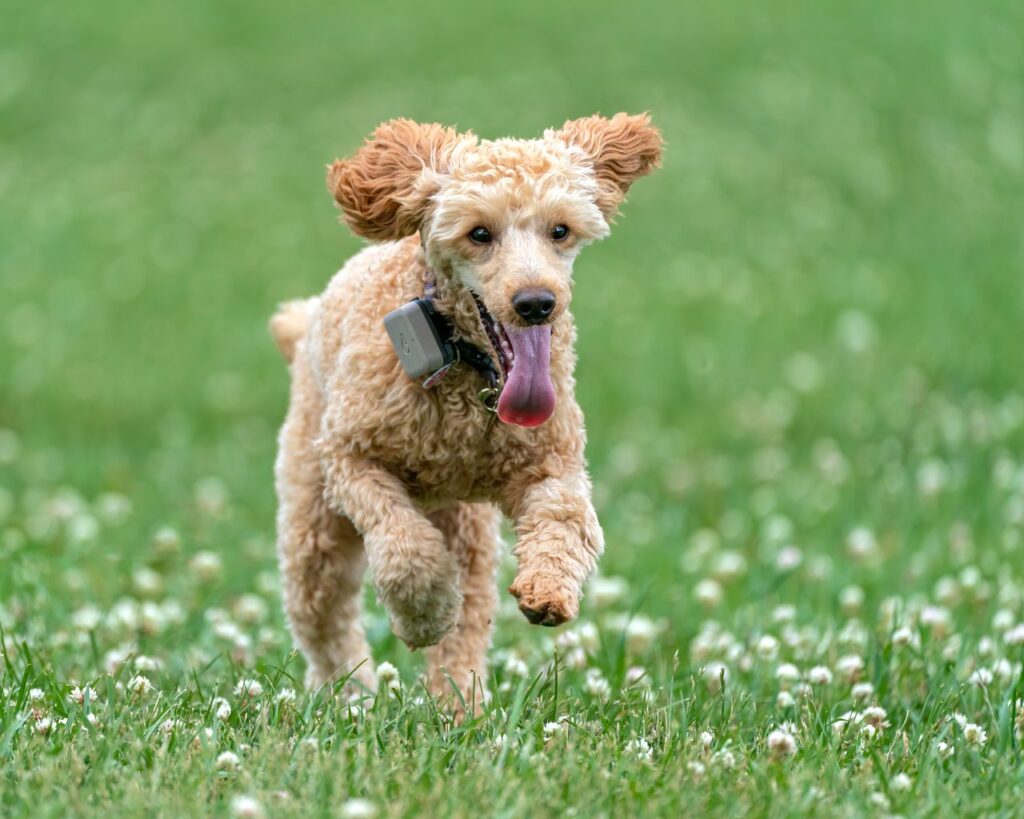
If your dog is a fence-jumper, gate-darter, or door-bolter, real-time recovery is everything. A GPS tracker with frequent real-time updates and instant escape alerts should be the priority, so the moment your dog leaves the yard you know about it and can watch their location live as you head out. Geofencing pays for itself with this type of dog. Just mind the battery, since an escape artist who gets out is no good if the tracker died overnight.
The Adventurous, Hunting, or Working Dog in Rural Areas
For dogs that range far from home, especially in the backcountry, deep woods, or open farmland, cellular coverage becomes the deciding factor. Standard GPS trackers depend on a cell signal that can vanish in remote areas right when you need it. This is where radio frequency (RF) and hunting-grade GPS systems shine, transmitting directly to a handheld receiver without relying on cell towers. They’re larger and more of an investment, but for serious off-grid use they’re the most dependable choice, and typically have no monthly fees.
The Everyday Companion Dog
For a dog that’s mostly home and leashed on walks, a standard GPS collar tracker is plenty: it gives you peace of mind for the occasional slip-up without needing hunting-grade gear. Activity and health monitoring, included with many GPS trackers, is a nice bonus for keeping tabs on exercise.
Tracking Devices for Cats
Cats are trickier than dogs, because they roam unpredictably and are small enough that a bulky device won’t work.
The Indoor-Outdoor Cat
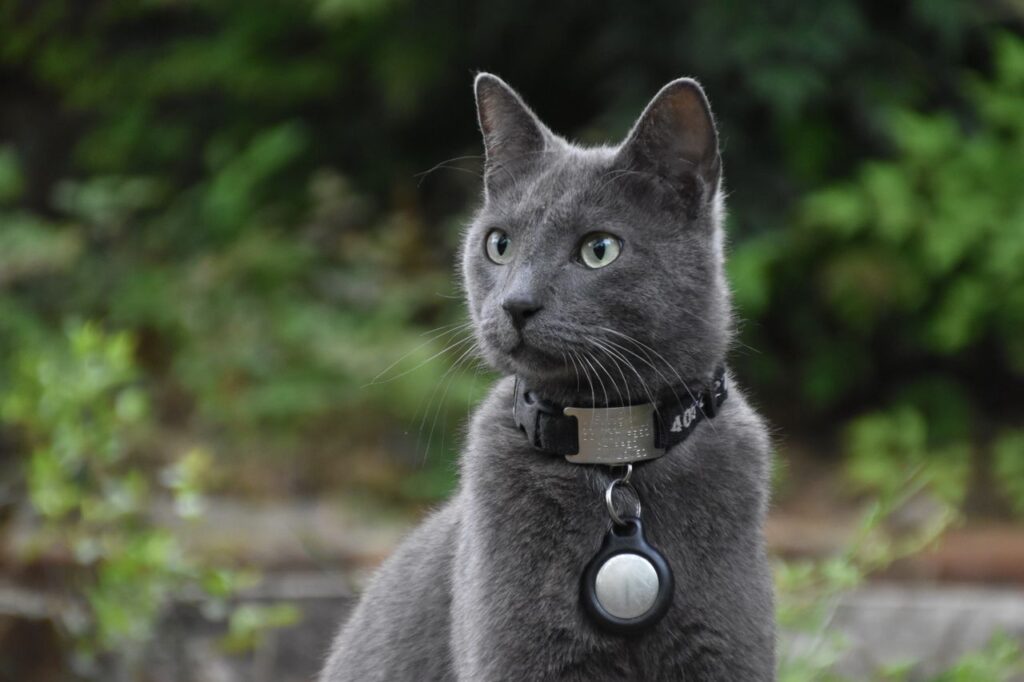
Prioritize a lightweight GPS tracker designed specifically for cats, attached to a breakaway safety collar so it releases if it snags on a fence or branch. Geofencing is especially useful: set your home and yard as the safe zone and get an alert when your cat wanders beyond it. Because cats squeeze into tight, hidden spots, a faster location update rate makes a hiding cat much easier to pinpoint.
The Indoor-Only Cat
If your cat never goes out and you just want to find them when they’re tucked under a bed or in a closet, you don’t need a cellular GPS device. A simple Bluetooth tag can be enough, with long battery life and no subscription. Remember its limit, though: if an indoor cat ever does slip outside, a Bluetooth tag won’t reliably find them once they leave your phone’s range.
The Flight-Risk or Senior Cat
For a cat that bolts at loud noises or is getting older and more disoriented, a lightweight, comfortable GPS tracker with reliable escape alerts offers peace of mind for those unpredictable moments, since the device may be worn around the clock.
Tracking Devices for Birds
Tracking escaped birds is a specialized world of its own, and consumer dog-and-cat gear generally won’t work. Standard GPS pet collars don’t fit a bird, and Bluetooth item tags are far too limited (and not designed for animals). Instead, bird tracking, used mainly by falconers and parrot “free-flight” owners, relies on dedicated equipment:
- Radio telemetry (UHF “beeper” systems): a tiny transmitter, usually leg- or tail-mounted, sends a radio signal that the owner follows with a handheld directional receiver. This is the long-established method, especially for smaller birds. Note that in the U.S. and Canada, using certain UHF bands can require an amateur (ham) radio license.
- Specialized bird GPS transmitters: lightweight units made specifically for raptors and parrots, mounted on the tail or leg, that stream real-time location to a phone or handheld. Some combine GPS with a radio beacon as a backup.
The key principle for birds is weight: a tracker must be only a small fraction of the bird’s body weight and fitted so it never hinders flight. Because this gear is specialized and the fit is critical, it’s worth consulting an avian vet or an experienced falconry/free-flight community before buying. A microchip is still worthwhile for a pet bird as a permanent ID, but as with other pets it only helps if someone finds the bird and has it scanned.
Other Pets
For smaller mammals like rabbits and ferrets, the same rules apply as for cats: prioritize a very lightweight device and a safe, comfortable fit, and check the manufacturer’s minimum weight recommendation, since many trackers are simply too heavy for them. Dedicated lightweight GPS or RF options exist, but always confirm the device is rated for your pet’s size before buying.
Two Rules That Apply to Every Pet
Whatever the species, two checks apply across the board:
- Always match the device’s size and weight to your animal and confirm it meets the manufacturer’s minimum weight recommendation; a tracker that’s fine for a Labrador may be unsafe for a kitten, a small parrot, or a rabbit.
- Weigh the upfront price against any ongoing subscription before you buy, so the true long-term cost is clear and there are no surprises a month later.

Why a Tracker Works Best Alongside a Community Safety Net
Even the best tracking device isn’t foolproof. Batteries die, collars slip off, signals drop in dead zones, and a frightened pet can travel surprisingly far surprisingly fast. That’s why the smartest approach pairs technology with people.
This is where PawBoost comes in. If your pet ever goes missing, a tracker helps you search, but a PawBoost lost-pet alert mobilizes your whole community, instantly spreading the word to thousands of local pet lovers, neighbors, shelters, and rescuers who can keep an eye out and help bring your pet home. A tracker and a community alert aren’t either-or; together they give your pet the strongest possible protection.
Frequently Asked Questions About Pet Tracking Devices
Can pet microchips be tracked?
No. This is one of the most common misconceptions in pet safety. A microchip is a passive RFID tag about the size of a grain of rice, with no battery, no GPS, and no ability to transmit a signal. It can’t broadcast a location or show you where your pet is. It only does anything when someone physically finds your pet and passes a compatible scanner over the chip, which reads the ID number linking to your contact details. In other words, a microchip is for identification, not location tracking. If you want to see where your pet is in real time, you need a separate GPS or radio tracker. (And to be clear, implantable GPS “microchips” don’t exist as a real product, despite occasional online claims; the hardware simply can’t be shrunk to chip size or work from under the skin.)
Is there an app to track your pet’s microchip?
No app can show your pet’s microchip location, because the chip has no GPS or signal to track in the first place. What microchip-related apps and websites actually do is let you register and update the contact information tied to your pet’s ID number, and look up which registry a found chip belongs to (for example, through the AAHA Universal Pet Microchip Lookup Tool). That’s about identification and reunification after your pet is found and scanned, not live location. For an app that shows your pet moving on a map, you need a GPS tracker, which comes with its own companion app.
Are AirTags good for tracking pets?
Not really, and Apple itself states AirTags aren’t designed to track pets. An AirTag is a Bluetooth finder with a short direct range (roughly 30-100 feet) that relies on Apple’s “Find My” network, meaning it only updates its location when someone else’s Apple device happens to pass nearby. In a busy city it might work in a pinch, but on a trail, in a rural area, or anywhere without other Apple devices around, it can go silent exactly when you need it, showing only an outdated last-seen spot. There are also safety concerns: AirTags contain a small lithium battery that can be dangerous if a pet chews or swallows the tag, and they have no pet-safe attachment of their own. An AirTag can serve as a rough backup near home, but for reliable, real-time pet recovery, a purpose-built GPS tracker is the far safer choice.
Do pet GPS trackers really work?
Yes, GPS trackers reliably show your pet’s real-time location as long as there’s cellular coverage in the area, with accuracy usually within a few feet. Their main limitations are dead zones with no cell signal and the need to keep the device charged.
Do all pet trackers require a subscription?
No. Many GPS trackers require a subscription to maintain their cellular connection, but most Bluetooth tags and radio-frequency trackers do not. If avoiding monthly fees is a priority, focus on those options, keeping in mind the trade-offs in range and real-time tracking.
Can I use an item tracker (like a Bluetooth tag) on my pet?
You can attach one, but it isn’t a reliable way to track a pet that leaves home. Bluetooth tags offer only short range and occasional location snapshots rather than live tracking, they depend on other phones passing nearby, and their makers generally state they aren’t designed to track pets. They’re best as a near-home backup, not a primary safety device.
Is a microchip the same as a GPS tracker?
No. A microchip holds your contact information and only works when someone scans it at a vet or shelter; it has no GPS and can’t show you a location. A GPS tracker actively shows your pet’s whereabouts in real time. Ideally your pet has both a microchip and a tracker, since they do different jobs.
What’s the best tracker for a cat?
For cats, prioritize a lightweight device made for their size and weight, with a breakaway-safe collar attachment. A GPS tracker with geofencing is a strong choice for indoor-outdoor cats, while an indoor-only cat may do fine with a simpler short-range option. Always check the manufacturer’s minimum weight recommendation.
Are pet trackers waterproof?
Many are water-resistant or waterproof, but not all, and ratings vary. Since pets get wet and dirty, check the specific device’s water-resistance rating before buying if your pet swims or spends a lot of time outdoors.