
What to Do If You Find an Injured Dog: A Step-by-Step Guide
Few things are more distressing than coming across a dog in pain, whether it’s your own pet after an accident or a hurt, frightened stray limping along the roadside. Your instinct is to rush in and help, but with an injured dog, a calm, careful approach protects both of you. Even the gentlest dog can bite when it’s scared and in pain, and the wrong move can worsen an injury.
The good news: knowing a few key steps makes all the difference. This guide walks you through exactly what to do, how to approach an injured dog safely, basic first aid (including that all-too-common injured paw), who to call, and where to take a hurt stray. At PawBoost, we’ve helped reunite thousands of lost pets with their families, and we know that a hurt dog on the street is very often someone’s missing companion, so acting thoughtfully can save a life and mend a family.
How to Safely Approach an Injured Stray Dog
Keep in mind that your own safety comes first. An injured dog, whether it’s your own pet or a stray, may behave unpredictably out of pain, fear, or confusion, and even the friendliest dog can react defensively when hurt. So before rushing in, take a few seconds to assess. You can’t help an injured dog if you end up injured too.
Check the Scene
Look for hazards before you approach: oncoming traffic, downed power lines, water, sharp objects, or other animals that could endanger you or the dog. If a dog is hurt in the road, don’t dart into traffic, pull your car fully off the road, turn on your hazard lights to alert other drivers, and move carefully.
Read the Dog’s Body Language
Watch from a short distance before approaching, because the dog’s body language tells you how frightened or defensive it is, and both aggression and fear can lead to a bite. The ASPCA groups the warning signs into two types.
Signs of aggression (the dog trying to look bigger):
- Ears up and forward
- Raised fur along the back or tail
- A stiff, straight-legged stance
- A high, vertical tail, sometimes wagging fast
- Hard staring
- Growling, barking, or lunging
Signs of fear or anxiety (the dog trying to look smaller):
- Cowering or lowering the head
- A tucked tail and flattened ears
- Repeated lip licking or yawning
- Avoiding eye contact
- Trembling or holding very still
- Growling or snarling
A dog frozen rigid in fear can be just as likely to bite as an openly aggressive one, so take either set of signals seriously. If a dog shows these, don’t force contact, this is when to keep your distance and call for professional help (see below), and keep others away in the meantime.
Approach Calmly
If the dog seems approachable, everything you do should signal “I’m not a threat.” Move slowly, without sudden movements or loud noises. Crouch or kneel to make yourself smaller, and approach from the side in a slight curve rather than head-on, which feels confrontational to a dog. Keep your eyes slightly averted rather than staring, speak in a soft, steady voice, and don’t loom over the dog or try to hug it. Let it see and smell you before you touch it, and keep your face away from its mouth throughout. For a stray, offering food or water from a safe distance can help build a little trust.
When to Step Back and Call for Help
Sometimes the safest and most helpful thing you can do is not approach at all. Step back and call animal control, a shelter, the police, or a veterinarian if the dog is aggressive or too terrified to handle, if it’s bleeding heavily or has a broken bone protruding through the skin, or if it’s trapped somewhere you can’t safely reach. In these cases professionals have the tools and training to help without anyone getting hurt, and your role is to keep the dog in sight and keep others away until they arrive.
How to Safely Restrain an Injured Dog
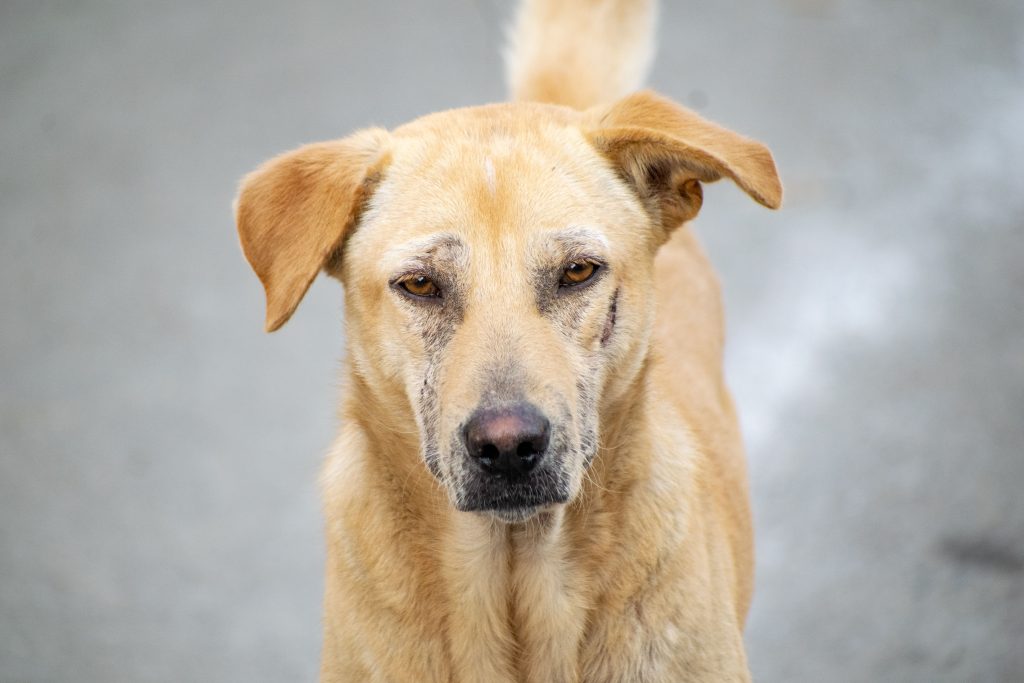
Once you’ve judged it’s safe to approach, the first thing to do before any first aid or moving is protect yourself, because pain and fear can make even the most docile dog bite, and you can’t help a dog if it injures you.
Consider a Muzzle
A frightened, painful dog may bite as a reflex, so a muzzle is often the safest option while you handle it. If you don’t have one, you can improvise from a leash, belt, necktie, rope, or a strip of cloth: form a loop, slip it over the snout from a little distance away, tighten it so the dog can’t open its mouth, then bring the ends behind the ears and tie them securely. It works because a dog has only one muscle to open its jaw, so once the mouth is held closed it stays shut fairly easily, and the dog can still breathe through its nose.
There’s one critical exception: never muzzle a dog that is vomiting, choking, struggling to breathe, or has a nose or mouth injury, since it needs its mouth clear. Only keep a muzzle on while you’re actively handling the dog, a muzzled dog can’t pant to cool itself, so remove it once the dog is resting. And if you can’t muzzle safely, don’t force it, stay back and wait for professional help.
Wrap the Dog if Needed
For a dog you can’t easily manage, a thick towel or blanket helps. Gently drape it over the dog, or wrap a small dog snugly like a “burrito” to limit head movement and protect yourself, then use it to lift or scoop the dog. This calms many dogs and shields you from bites and scratches while you get it ready to move.
First Aid for an Injured Dog
With the dog safely restrained, you can address urgent problems on the spot. Remember that first aid buys time; it is never a substitute for veterinary care, so follow anything you do with a prompt trip to the vet. Your goal is simply to stabilize the dog and stop things getting worse.
A quick word on supplies: a basic pet first-aid kit (gauze pads and rolled gauze, self-adhesive bandage wrap, antiseptic wipes, disposable gloves, blunt-tipped scissors, a small towel, and a spare leash) is worth keeping in your car. But in a pinch, everyday items work too, a clean t-shirt as a bandage, a sock or belt to hold a dressing in place, a towel to apply pressure or wrap a small dog.
Bleeding
For a bleeding wound, press a clean pad of gauze or cloth firmly over it and hold steady pressure for several minutes; elevating the injured limb if you can helps slow the flow. Don’t be alarmed by the amount of blood, even a small cut, especially on a paw, can look dramatic. If blood soaks through, don’t lift the pad (that disturbs forming clots), just add more layers on top. If you can’t stop the bleeding with about 10 to 15 minutes of steady pressure, treat it as an emergency and get to a vet right away.
Internal bleeding is more dangerous precisely because you can’t see it, and it can’t be stopped without a vet. Warning signs include:
- Pale or white gums
- Rapid or labored breathing
- Weakness or wobbliness
- A swollen or tight abdomen
- Cold-feeling legs and ears
Any of these means the dog needs emergency care immediately.
A Dog With an Injured Paw
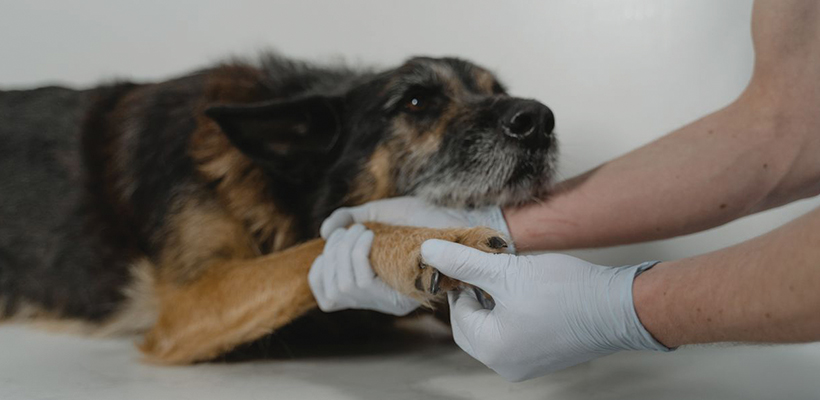
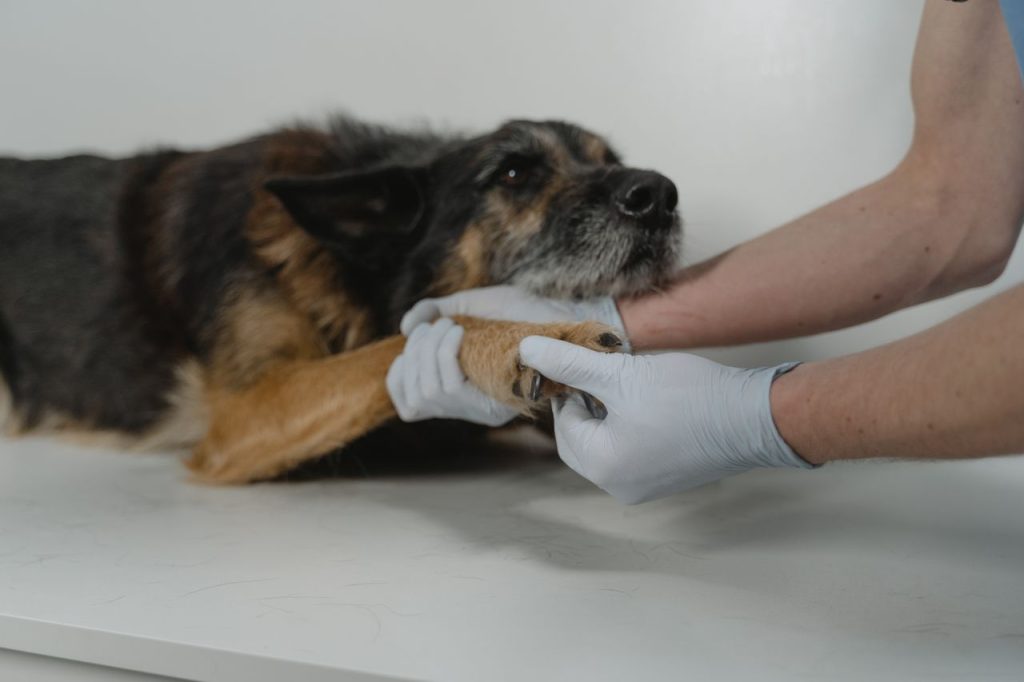
Paw injuries are among the most common problems you’ll see, cuts from glass or debris, torn nails, or burns from hot pavement. Signs include limping, obsessively licking the paw, bleeding, or refusing to put weight on it.
Start by gently flushing the wound with clean water or sterile saline to wash away dirt or grit, so you can see it clearly. Only remove debris that rinses away easily; never dig into the wound to pull out embedded glass or objects, as that can cause more damage, deep foreign bodies are a job for the vet. Apply gentle pressure to any bleeding as described above, and don’t use human antiseptic creams or ointments unless a vet approves them.
If you need to cover the paw for transport, wrap it loosely in clean gauze, snug enough to stay put but never so tight it restricts circulation. A good rule of thumb: you should be able to slip two fingers under the bandage. That said, a light covering to protect the wound on the way to the vet is usually all a good Samaritan needs to do, proper bandaging is best left to the clinic. Get any persistent limping, deep cut, or embedded object seen by a vet, since paw wounds infect easily and some hide deeper damage.
Knowing When a Wound Needs a Vet
Not every wound needs stitches, but some clearly need professional care. Head to a vet promptly if you see:
- Wound edges that gape open and won’t close together
- Bleeding that continues despite 15 minutes of direct pressure
- Wounds exposing fat, muscle, or bone
- Puncture wounds (often deeper than they look)
- Any wound on the face, over a joint, or over the chest or abdomen
Burns
Flush a burn gently with room-temperature water and cover it with a clean, damp cloth, then head to the vet. This can hurt, so muzzle if needed.
Shock
A seriously injured dog can go into shock, with pale gums, rapid breathing, and weakness. Keep it warm, calm, and as still as possible, minimize any movement (especially if you suspect a spinal injury, broken bones, or neurological problems), and get to a vet urgently.
How to Move and Transport an Injured Dog
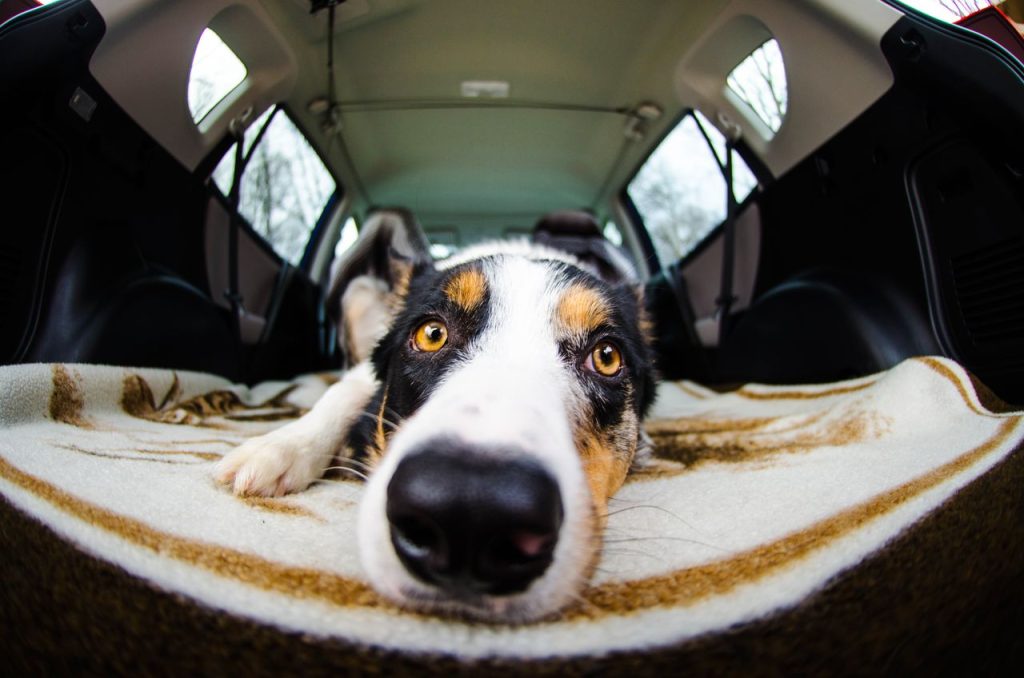
Once the dog is restrained and any urgent first aid is done, move it as little as possible, and let it rest in whatever position seems most comfortable rather than forcing it. How you move it depends on its size:
- Small dogs can be gently wrapped in a towel and lifted with the body supported, or placed in a carrier, remove the top and lower them in rather than pushing them through the door, or use a sturdy cardboard box. Covering the carrier with a blanket helps keep the dog calm.
- Large dogs are best moved on a makeshift stretcher: a rigid board, or a blanket, towel, or tarp slid carefully underneath, which two people can then lift by the taut ends and carry between them. As a rough guide, don’t try to lift a dog over about 30 pounds alone, get help.
- If you suspect a back or neck injury, keep the dog as still and flat as possible, supporting the head, neck, and back in a straight line to avoid further damage, and call a vet before moving it if you can.
Once the dog is secured, cover it with a blanket to keep it warm (unless it may be overheating) and keep it calm during the trip. Make the drive as smooth as you can: avoid sudden stops and sharp turns, keep the radio off or low, and talk to the dog in a soothing voice the whole way.
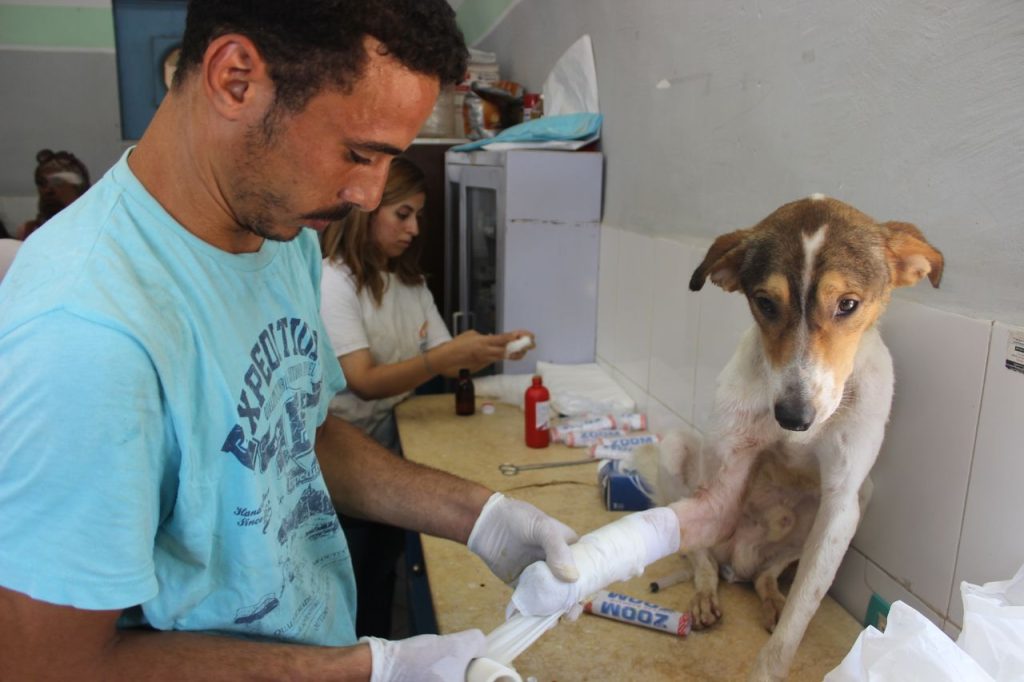
Who to Call and Where to Take an Injured Stray Dog
Whatever first aid you’ve given, the next step is always the same: get the dog to professional care. Who you call depends a little on whether it’s your own dog or a stray.
If it’s your own dog, call your veterinarian or, after hours, the nearest emergency animal hospital. Phone ahead so they can prepare for your arrival and give you guidance for the drive.
If it’s a stray, or a dog you can’t handle safely, you have a few options, and you don’t have to manage alone:
- Animal control or animal services is usually the best first call for a stray, especially one that’s aggressive, badly hurt, or that you can’t safely contain. Search “[your city or county] animal control” or call your area’s non-emergency line; many run 24-hour dispatch for injured animals.
- A local veterinarian or emergency animal hospital can treat the injuries, call ahead so they’re ready, and ask about their policy for strays brought in by good Samaritans (see the note on costs below).
- Animal rescues and shelters may help too, particularly if animal control is stretched. Some, including certain humane societies, specifically take in injured strays, but call first, since policies and hours vary.
Whoever you call, be ready to describe your exact location, the dog’s size and appearance, its behavior (friendly, scared, aggressive), the injuries you can see, and whether it’s contained or still loose. And if a dog is loose on a highway, call non-emergency police or animal control rather than chasing it into traffic yourself.

Is the Injured Dog Actually Lost? Reuniting It With Its Family
Here’s something easy to forget at the moment: a stray dog is very often a lost pet, and a worried family may be searching for it right now. So alongside getting it medical care, it’s worth trying to find its owner.
If it’s safe and the dog is calm enough, check for a collar and ID tag, and call or text any number you find. Have the dog scanned for a microchip, which is free and quick at most vet clinics, shelters, animal control centers, and many pet stores; a chip is often the fastest route to the owner. And post a found-dog alert. This is where PawBoost comes in: creating a free Found Pet alert instantly reaches thousands of local pet lovers, shelters, rescuers, and vets in your area who can help reunite the dog with its family. Many animal control agencies actually point finders to PawBoost for exactly this reason. Pair your alert with posts in local lost-and-found groups and flyers near where you found the dog.
A Note on Costs and the Law
Two practical things worth knowing before you take a stray home
- Helping an injured stray can carry real veterinary costs, and there’s no guarantee of reimbursement even if an owner turns up, so it’s wise to decide in advance how far you can go and to talk costs through with the vet.
- In most of the U.S., finding a stray doesn’t automatically make you its legal owner. Ownership generally transfers only after the stray-hold period set by your state or locality has passed and you’ve made a genuine effort to find the original owner. (These rules vary by location and change, so check your local animal services if you plan to keep the dog.) Reporting the found dog to animal control is part of doing this properly, and it also gives a searching owner a place to find their pet.
Finding an injured dog is frightening, but the right response is calm and methodical: keep yourself safe first, approach slowly and read the dog’s body language, muzzle and move it gently only if you can do so safely, apply basic first aid, and get it to a vet or animal control as fast as you can. And because a hurt stray is so often someone’s lost companion, take a moment to check for ID, scan for a microchip, and post a found-pet alert. Those steps give the dog its best chance, and may reunite it with a family that’s been desperately hoping for its return.
Frequently Asked Questions
What should I do if I find an injured dog?
First make sure the scene is safe and read the dog’s body language from a distance. If it seems approachable, move slowly and speak softly; if it’s aggressive or terrified, keep back and call animal control. Handle and move the dog gently (using a muzzle if it may bite, unless it’s struggling to breathe), apply basic first aid like pressure on bleeding, and get it to a veterinarian or animal control promptly. If it’s a stray, also check for ID and a microchip and post a found-pet alert.
Who pays for veterinary care for a stray dog?
If you choose to take the injured animal to an animal emergency hospital or veterinary clinic, make sure you are willing and able to assume financial responsibility for the pet. There are no guarantees the pet’s owner, if located, will reimburse you.
If you take the dog to a municipal shelter or animal control, they typically cover medical costs. Some private veterinary clinics have Good Samaritan funds or can direct you to local organizations that help with stray animal medical expenses.
Can I be held liable for helping an injured stray?
Most states have Good Samaritan laws that protect people who provide reasonable assistance during emergencies. However, these protections vary by location. Acting in good faith, staying within your abilities, and seeking professional help when needed typically provides the best legal protection.
Can I give an injured dog pain medication?
No, not without veterinary guidance. Common human painkillers like ibuprofen and acetaminophen are toxic to dogs, and even pet medications can be inappropriate depending on the dog’s condition or other drugs in its system. Always wait for a veterinarian’s instructions before giving anything.
Where can I take an injured stray dog?
For serious injuries, an emergency veterinary hospital is best (be prepared for possible costs). For a stable dog, your local animal control or shelter is often the right choice, and it’s also where a searching owner is likely to look. Call ahead wherever you go, since hours, capacity, and stray-intake policies vary.