
Last Updated on June 30, 2026
How to Recognize and Avoid Lost Pet Scams
Most people genuinely want to help reunite lost pets with their families. Staying cautious while searching for your lost pet helps protect you while keeping the focus on bringing your pet home safely.
The #1 Rule: Never send money until you have verified in person that the finder or organization actually has your pet.
Found a pet? Click here for tips on avoiding the found pet scam.
Warning: Common Lost-pet scams:
-
- Payment or Reward Request: Anyone asking for money to return your pet is likely a scam.
- Fake vet emergency: Scammers may call or text claiming your pet was injured and taken to a veterinary clinic. They may pose as a vet, shelter, law enforcement, or a person who found your pet and say that urgent payment is required.
- Fake or AI-Generated Photos: The scammer may claim they found your pet and send a photo of a similar-looking animal, or use AI to create a realistic image based on your pet’s photo.
- Fake pet-tracking services: People offering pet tracking, drone searches, or tracking dogs without credentials or proof. They will request payment to search for your pet.
- Impersonating law enforcement, shelters, or rescues: The scammer will ask for payment while pretending to be animal control, law enforcement, or a shelter employee. They may provide fake documents or fake-generated photos of your pet.
- Impersonating PawBoost: The scammer will say they are affiliated with or are working with PawBoost. They may claim your pet has been found. Official customer support emails from PawBoost will always come from an @pawboost.com email address. Messages from the public will show the sender’s personal email address. PawBoost does not offer customer support by phone or text. Do not respond to impersonators.
 Photo by Tookapic
Identifying Lost Pet Scams: Common red flags
Losing a pet is incredibly stressful, and unfortunately, scammers take advantage of that fear and urgency. These individuals monitor lost pet posts on social media, community forums, and lost-pet websites and contact owners pretending to have information about their pet.
Their goal is usually to confuse you, make you believe they have your pet, and pressure you into sending money or sharing personal information.
Knowing the most common red flags can help you protect yourself while you continue your search.
They demand money before returning your pet. Scammers often ask for payment before you meet in person to confirm if it’s your pet. They may request money through payment apps like Cash App, Venmo, or Zelle, or even wire transfers, gift cards, and cryptocurrency. In most cases, anyone demanding payment before you see your pet in person should be treated with extreme caution.
PawBoost employees will never contact you claiming your pet has been found and ask for payment, gift cards, cryptocurrency, verification codes, or account credentials.
They may use Fake or AI-Generated pet photos. Some scammers use AI tools to create realistic-looking photos that make it appear they have your pet. They may take photos from your PawBoost alert or social media posts and use them to generate new images. While these photos may look convincing, they can be completely fake.
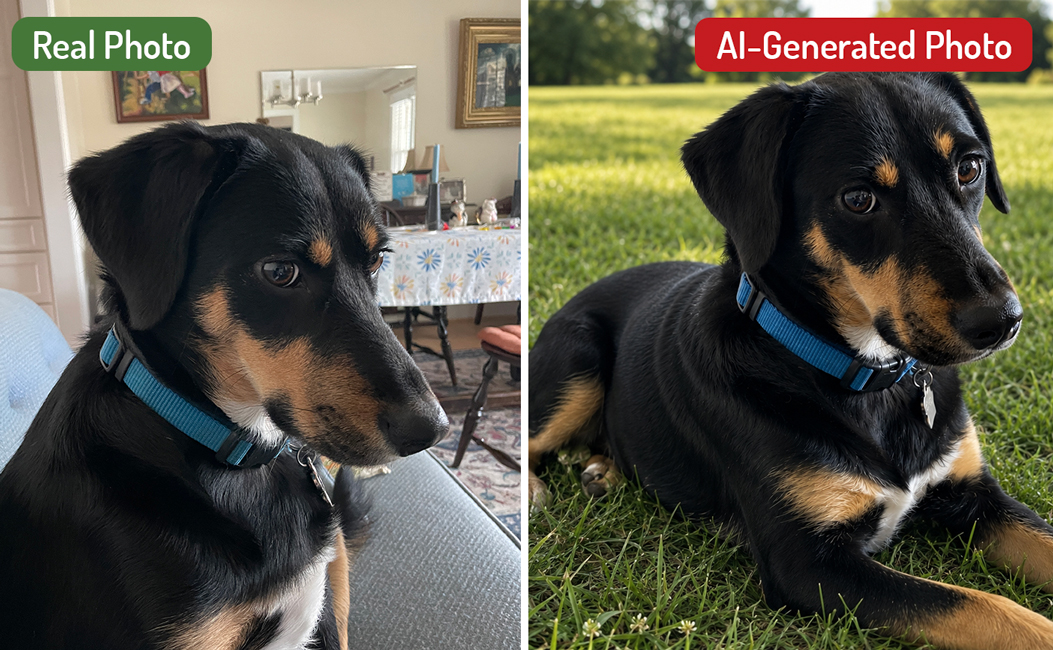
In our experience, AI image detection tools such as Is This AI? or reversely.ai can be helpful in identifying AI-generated pet photos. However, no detection tool is perfect. Before trusting anyone who claims to have your pet, we recommend requesting additional proof, such as current photos, a live video call, or specific information about your pet that only someone with the animal would know.
You can also perform a reverse image search using Google Images to determine whether the photo appears elsewhere online.
They may use your pet’s details to gain your trust. Scammers may reference details or photos you shared online to make it seem like they have your pet. To protect yourself, we recommend keeping one identifying characteristic private, such as a scar, unique marking, or other feature not visible in photos. This can help you verify whether someone truly has your pet before sharing additional information or sending money.
Fake Documentation. Scammers may send official-looking documents claiming your pet has been found by a shelter, veterinarian, animal control agency, or law enforcement. They often demand payment before allowing you to see or retrieve your pet. Always verify the claim by contacting the organization directly or visiting in person before sending money or providing personal information.
AI tools such as ChatGPT may help identify potential red flags in documents, emails, text messages, and screenshots. For example, AI may be able to spot suspicious language, inconsistencies, altered logos, unusual formatting, or requests that don’t align with standard procedures used by shelters and veterinary clinics. However, AI should be used as a supplemental tool only and should never replace direct verification with the organization that supposedly issued the document.
They refuse to meet in person. The scammer may claim they cannot meet face-to-face or continually make excuses to avoid meeting you. Some scammers will agree to meet you but still pressure you to send the payment, reward, or gas money before you actually see your pet. For example, they may say the pet is in their car or nearby and that they will bring it to you after receiving payment. Once the money is sent, they disappear.
Legitimate finders will be willing to arrange a safe, public place to reunite you with your pet.
They pressure you to act immediately. Scammers often create a false sense of urgency by claiming your pet is injured, about to be transferred, or will be unavailable unless you send money right away. Legitimate shelters, veterinarians, and finders will allow you time to verify the situation.
They suggest moving the conversation to another platform. Scammers often try to move conversations away from trusted platforms and onto private messaging apps such as WhatsApp, Telegram, or Google Chat. This makes it harder to report suspicious activity and may allow them to pressure you into sharing personal information or sending money. Be cautious of anyone who insists on switching platforms, especially before providing credible proof that they have your pet.
Google Verification Code: The scammer will claim to have found your pet and ask for a Google or phone verification code to “prove you’re the owner.” This actually lets them hijack your phone number. Do not share Verification Codes with anyone.
 Photo by freestocks.org
Tips to Avoid Lost Pet Scams: What To Do If Someone Claims They Found Your Pet
If someone contacts you claiming they found your pet, take a moment to verify the information before taking any action.
- Never send money upfront – Legitimate finders, shelters, veterinarians and law enforcement will not require payment before you confirm your pet’s identity in person.
- Ask for specific proof – Request a FaceTime call, a new photo or short video of the pet, ideally showing something specific like a unique feature of your pet.
- Ask questions only the finder would know – For example, ask where they found the pet, what collar the pet was wearing, or request that they describe distinctive markings, scars, personality traits, or other details that would not be visible or obvious from photos and information posted online.
- Arrange to Meet in a Safe, Public Place – If someone claims to have your pet, meet in a public location where you can confirm the pet’s identity in person before providing payment or personal information.
- Do not share verification codes – Never share Google, phone, or email verification codes with anyone claiming to have your pet. These codes can be used to access your accounts.
- Trust your instincts – If something feels suspicious or the person pressures you for money quickly, it may be a scam.
If you believe someone is trying to scam you:
- Stop communication immediately.
- Do not send money or personal information.
- Take screenshots of messages or call details in case you need to report the scam.
- Contact PawBoost Support to report it. Our team will be able to help verify or provide guidance on next steps.
Remember: Scammers often rely on urgency and emotional pressure. Taking a few simple steps to verify the situation can help protect you while you continue searching for your pet.
 Photo by Vitaly Gariev
How PawBoost Helps Protect Pet Owners from Scams
At PawBoost, the safety of our community is important to us. We encourage pet owners to stay cautious when communicating with anyone claiming to have found their pet. Our team reviews reports of suspicious activity and takes action when posts or messages appear to violate our community guidelines.
If you believe someone is attempting to scam you in connection with a lost pet alert, we encourage you to report it to PawBoost Support. Sharing these reports helps us monitor scam patterns and continue educating our community about how to stay safe.
By staying informed and reporting suspicious behavior, our community can help protect one another while keeping the focus on safely reuniting lost pets with their families.
 Photo by Thirdman
Found a Pet? Beware of This Scam
While people with lost pets are often the target of scammers, individuals who find a pet can also become a victim. The scammer may pretend to be the pet’s owner, with the goal of claiming the animal to be resold or, in extreme cases, used for cruel purposes such as bait in dog fighting.
When someone contacts you claiming to be the pet’s owner, it’s important to verify their claim before returning the pet. If the owner of the pet you found is able to verify proof of ownership, that is amazing news! It is always best to play it safe by arranging to meet in a public place to give them back their furry family member.
How to Verify Pet Ownership
Reuniting a pet with its family is a wonderful moment, and taking a few precautions helps ensure the pet is returned to the correct home.
- Ask for photos or proof of ownership
The person may be able to provide photos of the pet with family members, veterinary records, adoption paperwork, or other documentation showing the pet belongs to them. - Ask them to describe unique features
Request that they describe distinctive markings, scars, personality traits, or other details that would not be obvious from photos posted online. - Avoid asking leading questions
Instead of asking something like, “Does he have white spots on his front paws?”, ask the person to describe the pet’s markings on their own. - Meet in a safe public place
Once you are confident the person is the rightful owner, arrange to meet in a safe public location to reunite them with their pet.
When in Doubt, Ask for Help From PawBoost or a Trusted Third Party
- If you are unsure whether someone claiming a pet is truly the owner, feel free to contact PawBoost support and we can help advise.
- Consider arranging to meet at a local animal shelter, veterinary clinic, or animal control office. Staff at these locations may be able to help scan the pet for a microchip or review identifying information to help confirm ownership. Meeting at a neutral location can also help ensure a safe and transparent reunion for everyone involved.
- If you feel uncomfortable meeting in person, you may also choose to contact your local animal control agency for guidance on how to proceed.
Frequently Asked Questions
How can I identify pet scam websites?
To identify scam lost pet websites, look for red flags such as upfront payments, lack of contact information, and poor reviews. Verify through reputable sources and avoid sharing personal details prematurely.
Is PawBoost legit?
Yes, PawBoost is definitely legit! 2 million pets have been reunited (and counting!). There are 7 million Rescue Squad members across the country who get local lost pet alerts. PawBoost is free to use and it really works. Check out our Happy Tails here!
Is PawBoost a scam?
PawBoost is not a scam. More than 7 million Rescue Squad members are signed up for local lost & found alerts. You can add your pet to the database, send out alerts, and create lost pet flyers – all for free!
Is PawBoost free?
Yes! All the core features, such as adding pets to the lost & found database, sending local alerts, creating social posts, and making lost pet flyers, are free for everyone.
Do you have to pay for PawBoost?
PawBoost is a free service with premium upgrades that increase the reach of your alert. With more than 7 million Rescue Squad members, you can add a pet to the database, send alerts to the Rescue Squad, make social media posts, and create lost pet flyers – 100% free!
Comments are closed.