

What to Do with a Stray Cat: A Complete Guide for Finding and Helping Lost Cats
A stray cat showing up in your life rarely comes with instructions. Maybe one is crying at your back door, hiding under your car, or has started appearing in your yard every evening. Whatever the situation, knowing how to respond, and doing it the right way, can be the difference between a cat that ends up safe and reunited with its family and one that slips back into the streets. The good news is that helping a stray cat isn’t complicated once you understand what it needs; it just takes a little knowledge and a little patience.
Cats are not small dogs. A roaming cat might be a lost pet, an abandoned one, a neighbor’s indoor-outdoor cat, or a feral cat who has never lived with people and never will. Each of those calls for a completely different response. At PawBoost, we’ve helped millions of lost pets find their way home, and this guide walks you through all of it: telling what kind of cat you’re dealing with, earning its trust, catching it safely, feeding it, finding its owner, helping it through winter, and humanely keeping cats out of your yard if that’s what you actually need.
How Many Stray Cats Are in the US
Understanding the scale of the stray and free-roaming cat situation in America helps illustrate why your actions matter so much when you come across a lost cat. The numbers are significant, and behind many of them is a family hoping to be reunited with a cat they love.
National Shelter Intake Statistics
The cat numbers are striking on their own. Of the roughly 5.8 million dogs and cats that entered U.S. shelters and rescues in 2025, cats made up the larger share at about 3 million, edging out the 2.8 million dogs, according to ASPCA data drawn from the Shelter Animals Count 2025 Annual Report. Most of those animals, around 59% across both species, arrived as strays rather than owner surrenders. For cats specifically, that intake swells dramatically each spring and summer during “kitten season,” when litters of newborns flood shelters and capacity is stretched thinnest. Many cats land in the system simply because they wandered off, were displaced, or were abandoned and couldn’t find their way home.
Where those cats end up tells its own story. Of the cats handled in 2025, roughly 2.2 million were adopted and about 376,000 were transferred to other organizations, but an estimated 277,000 were euthanized, a reminder that shelter space for cats is finite and that keeping a findable cat out of the system, or getting it home fast, genuinely saves lives.
Return-to-Owner Rates for Stray Cats
Here is the statistic that should shape everything you do with a lost cat, and the single biggest way cats differ from dogs. While stray dogs are reunited with their families fairly often, stray cats almost never are. The Shelter Animals Count 2025 report found that stray dogs were roughly six times more likely to be returned to an owner than stray cats. In raw numbers, ASPCA figures estimate only about 362,000 cats were returned to an owner or to the field in 2025, a sliver of the 3 million that came in.
Why such a gap? Cats wear collars and microchips far less often than dogs, many roam freely as outdoor or community cats, and tracking down a cat’s owner is simply harder. The practical takeaway runs through this entire guide: with a lost cat, the legwork you do yourself, scanning for a chip, posting alerts, canvassing the immediate neighborhood, matters far more than handing the cat to a shelter and hoping the owner turns up.

First Steps for a Safe Approach
Before you rush to help a cat right away, it’s important to know how to assess the situation and understand what kind of animal you’re dealing with. Cats, unlike dogs, can end up on their own for a variety of reasons, and not all of them need (or want) to be rescued.
Take a moment for your own safety, too. A scared or injured cat can scratch and bite quickly, and those wounds carry a real risk of infection. Observing before you act protects both the cat, by sparing it unnecessary stress, and you
How Can You Tell If a Cat Is Stray, Feral, or Owned?
This is the first and most important question, because the answer changes everything you do afterward.
- A stray cat is one who was once someone’s pet and is now lost or abandoned. Strays are socialized to people. They may be shy at first, but they tend to make eye contact, respond to a soft voice, and warm up to you over hours or days.
- A feral cat has not been socialized to humans and generally wants nothing to do with them. Because they were never accustomed to people during the critical early weeks of kittenhood, adult feral cats stay fearful of human contact and don’t adapt to life indoors, so forcing one into a home causes it tremendous stress rather than rescuing it. Their best life is outdoors, ideally managed through a Trap-Neuter-Return program.
- An owned outdoor cat is the possibility people forget. Plenty of cats have homes and still roam all day. An owned cat usually looks well-fed and groomed, shows up at predictable times, moves with purpose, and isn’t desperate for food.
Signs to weigh as you watch a cat
- Friendliness: Approaching, rubbing, or meowing at you leans toward lost or owned, not feral.
- Body condition: Skinny, dirty, or matted suggests time on its own, but don’t over-read it; some owned outdoor cats look rough too.
- Company: Strays are usually alone. Feral cats more often live in colonies.
- Routine: A cat that appears at the same time daily and heads home in the same direction likely belongs to a neighbor.
- Ear tip: A cleanly removed ear tip means the cat has been through TNR. This is the universal sign of a sterilized community cat, and it usually means the cat is being managed and should be left where it is.
Telling these apart is hard, especially with a frightened cat. A scared lost pet can act a lot like a feral one, and a cat that panics when confined is not necessarily feral. When in doubt, give it time, observe over a few days, and lean on a local shelter or cat rescue for help.
How to Get a Stray Cat to Come to You and Trust You
Once you’ve concluded that the cat is likely a lost or abandoned pet that wants help, the next challenge is closing the distance. With dogs this can take minutes. With cats, patience is the whole game, and rushing it almost always backfires.
Master Non-Threatening Body Language
How you hold yourself matters as much as anything you do. Sit or crouch down to get closer to the cat’s level, since standing and hovering over a cat feels intimidating to it. Avoid direct eye contact, because in the feline world a hard stare reads as a challenge; glance away or look casually around instead. When the cat does look at you, try a slow blink: narrow your eyes and close them gently for a couple of seconds. This is the closest thing cats have to a smile, and it tells the cat you mean no harm. Keep your voice low and soft. To let the cat investigate you, slowly extend a single finger or the back of your hand, kept lower than its head, and let it come to sniff you rather than reaching in.
Use Food to Build Trust
Food is your best ambassador. Strong-smelling wet cat food or plain cooked chicken set a short distance away lets a wary cat eat while it gets used to your presence. The key is routine: put the food out at the same time and in the same spot every day, and once the cat is comfortable eating with you there, sit a few feet away while it eats (still without staring at it). Over several visits, place the food a little closer to you each time.
One practical tip: pick up any uneaten food after about 30 to 45 minutes, so you’re not inadvertently feeding other wildlife or drawing in territorial animals. Many genuinely fearful strays need days, sometimes weeks, of this routine before they’ll let you touch them, and that’s completely normal.
Respect the Cat’s Boundaries
Let the cat invite contact rather than forcing it. When a cat rubs its cheeks or head against your hand or leg, it’s marking you with its scent and signaling that it’s open to being touched, which is your green light. If it does let you pet it, stick to the safe, scent-heavy zones cats enjoy: the cheeks, chin, and the base of the ears. Steer clear of the belly, legs, and tail, which most cats are protective of and which can prompt a swat or bite even from a cat that’s warming up to you.
What to Do If the Cat Won’t Approach
If the cat hisses, flees, or clearly won’t tolerate you no matter how patient you are, don’t force contact. It may be feral, in which case a TNR group or shelter is the right call rather than trying to bring it indoors. Note the cat’s location, appearance, and any features, and reach out to local cat-experienced rescues for guidance.
Reading the Cat’s Body Language
Throughout the process, let the cat’s body tell you how it feels and adjust your approach accordingly. Cats communicate constantly through posture, ears, eyes, and tail, and learning to read those signals tells you when to move closer and when to give the cat space.
Signs the cat feels safe and receptive:
- A tail held high, sometimes with a little hook or curl at the tip
- Slow blinking while looking at you
- Approaching you, or rubbing against your hand, leg, or nearby objects
- A loose, relaxed body rather than a tense, coiled one
Signs the cat feels threatened, scared, or wants space:
- Ears flattened back or turned sideways into an “airplane” position
- A puffed-up coat and an arched back
- A tail that’s lashing, flicking, or thumping
- A tense, low crouch with dilated (wide, black) pupils
- Any hissing, growling, or spitting

How to Catch or Trap a Stray Cat
Once a cat trusts you, or if it’s injured and needs help fast, you’ll need to contain it safely. How you do this depends entirely on how friendly the cat is.
Catching a Friendly Cat
For a cat that lets you handle it, a hard-sided cat carrier is the safest container. Lure it in with food rather than grabbing and shoving, which can trigger panic and scratching. If you don’t have a carrier, a sturdy box with air holes and a secure lid works for a short trip. Cover the carrier with a towel afterward to lower the cat’s stress.
Trapping a Cat You Can’t Handle
For a cat that won’t let you near it, a humane live trap is the right tool, never your bare hands. Many shelters, rescues, and TNR organizations loan out humane traps and will coach you through using one. The basics: place the baited trap on level ground where the cat frequents, cover it partially with a towel so it feels den-like, and monitor it closely so a trapped cat isn’t left exposed to weather, dogs, or theft.
Two things worth knowing.
- A cat that thrashes or panics inside a trap is not necessarily feral; even lost indoor-only cats often panic when trapped.
- If you trap a cat with an ear tip, you’ve likely caught a managed community cat; release it where you found it unless it’s injured.
Keeping Everyone Safe
Once contained, move the cat away from traffic, dogs, and other hazards. Never transport a loose cat in a car, since a frightened cat can get under the pedals or bolt the moment a door opens. And never leave a contained cat in a hot vehicle; cats overheat dangerously fast.

Who to Call for a Stray Cat
Who you call depends on the cat’s condition and behavior, and cats add nuance because not every roaming cat needs to be removed at all.
When to Call Animal Control
Animal control is a primary resource for injured, sick, or aggressive stray animals, since they have the training, equipment, and legal authority to handle them. For healthy free-roaming cats, though, their involvement varies widely by jurisdiction, and some rural counties have no animal control at all (the sheriff’s office may be the contact there). For a healthy, friendly cat you think is lost, a shelter or cat rescue is often a better first call than animal control.
How to Find Your Local Animal Control Number
Search online for “[your city or county] animal control” or “animal services.” The number is usually on your local government website, or you can call your city’s non-emergency line and ask to be connected. Save it on your phone. Because some areas have overlapping city and county jurisdictions, knowing which one you’re in helps you reach the right agency.
What Information to Provide When You Call
Be ready to share:
- Your exact location (cross streets or address),
- A description of the cat (color, coat length, size, collar, ear tip),
- The cat’s behavior (friendly, fearful, injured),
- Whether it’s contained or loose
- Your contact information, in case they need to reach out to you.
The more detail you give, the better they can help.
When to Call Shelters, Rescues, or TNR Groups Directly
For most found-cat situations, a local shelter, cat rescue, or TNR/community-cat group is your most useful contact. They can help tell a lost pet from a community cat, loan traps, scan for microchips, and advise on the right path for that specific cat.
Reserve 911 for true emergencies, such as a cat hit by a car or an animal posing an immediate safety threat.

What Do Stray Cats Eat? Safe Food and Water Guidelines
As Dr. Lisa A. Pierson, DVM, explains in her essay Feeding Your Cat: Know the Basics of Feline Nutrition, cats have much stricter dietary needs than dogs, so “what works for a stray dog” doesn’t automatically apply here.
Water Comes First
Offer fresh, clean water in a shallow bowl and let the cat drink at its own pace. If a cat is very dehydrated, don’t let it gulp a huge amount at once, which can cause vomiting.
Something many people don’t realize is cats have a naturally low thirst drive and are built to get most of their water from their food, the way they would from prey in the wild. That’s a big reason wet (canned) food is generally a better choice than dry kibble for a cat, since canned food is roughly three-quarters water while dry food contains very little. For a stray that may already be dehydrated, the extra moisture in wet food is a real plus.
What Can I Feed a Stray Cat?
The best option is plain canned (wet) cat food, which is palatable, hydrating, and close to what a cat is designed to eat. Dry cat food works if that’s all you have on hand, but wet is preferable, especially for a dehydrated stray. If you have no cat food at all, these plain human foods are safe in small amounts as a short-term stopgap:
- Plain cooked chicken or turkey (no seasoning, no bones)
- Plain cooked fish, boneless (in small amounts; don’t make fish a staple)
- Plain scrambled or boiled egg
- Plain cooked, unseasoned meat with the fat drained
A crucial difference from dogs: cats are obligate carnivores, meaning their bodies are built to get nutrition from animal-based protein and they can’t thrive on plant proteins, grains, or vegetables the way a dog or human can. Meat-based protein supplies amino acids like taurine that cats can’t make for themselves, so any food you offer should be meat-first. Offer small portions at first, since a cat that hasn’t eaten in a while can get an upset stomach from eating too much too fast.
Keep in mind these are short-term, emergency measures. Plain chicken or egg is fine to get a hungry stray through a day or two, but it isn’t a complete, balanced diet, so switch to proper cat food as soon as you can.
Foods to Avoid (Toxic to Cats)
Never offer a stray cat any of these:
- Onions, garlic, chives, or leeks
- Chocolate and caffeine
- Grapes or raisins
- Alcohol and raw dough
- Xylitol (an artificial sweetener)
- Cow’s milk: despite the cliché, most cats are lactose intolerant and milk causes digestive upset
- Heavily salted, fatty, or seasoned foods
When in doubt, stick to plain meat or wait until you can get proper cat food. If you suspect the cat ate something toxic, contact the ASPCA Animal Poison Control Center right away.
When to Withhold Food
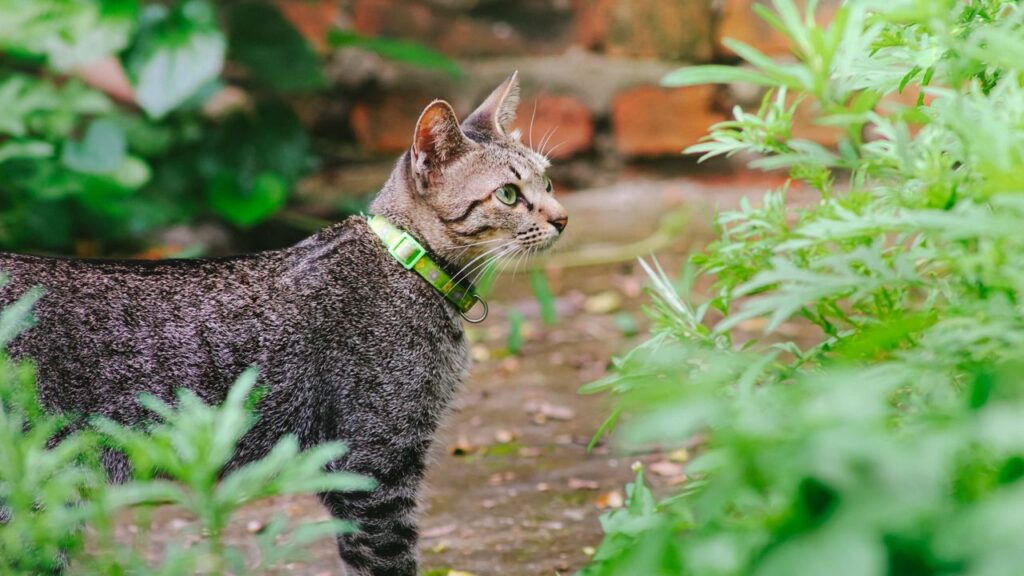
If the cat is vomiting, has bloody diarrhea, appears severely bloated, refuses water, is struggling to breathe, or seems disoriented, withhold food and seek veterinary care as soon as possible. A severely emaciated cat needs careful, vet-guided refeeding, since “refeeding syndrome” can occur when a starving animal eats too much too quickly.
How to Find a Cat’s Owner: Reunification Steps
As we mentioned earlier in this article, reunification rates for cats are much lower than for dogs.The reasons usually cited are that fewer cats wear collars or microchips, more cats roam as outdoor or community cats, and identifying a cat’s owner is simply harder. The upshot: with cats, proactive owner-searching matters even more than it does with dogs.
The good news is that lost cats usually don’t go far. Even microchipped cats found long after going missing are frequently recovered within about a mile of home, so a tightly focused local search pays off.
Check for Identification Tags and Collars
The simplest path to reunification starts with the cat itself. If there’s a collar with a tag, that’s your fastest lead, though keep in mind that cats lose collars far more easily than dogs, so the absence of one tells you little about whether the cat has a home.
What to Do If You Find Contact Information
If the tag has a phone number, try calling right away. Leave a voicemail if no one answers, and send a text too, since many people respond to texts faster, and include a photo of the cat if you can. Be patient: the owner may be at work, dealing with an emergency, or out searching and unable to pick up.
Reading Rabies Tags and License Numbers
Even with no phone number, other tags can lead you to the owner. Rabies tags are issued by veterinary clinics and carry a tag number and the clinic’s name; call the clinic, give them the number, and they can look up who the cat belongs to. License tags, where cat licensing exists, are issued by your city or county and can be traced through animal control or the licensing department. Either tag can be a direct line to the owner.
Scan for a Microchip
A microchip scan is one of the fastest, most reliable ways to identify a cat’s owner, and it’s especially valuable for cats, who so often have no collar.
Where to get a free scan:
- Most animal shelters and veterinary clinics offer free microchip scans with no appointment needed
- Some pet stores provide this service too
- The scan takes just a few seconds and is completely painless for the cat
- Many shelters and vets are actually required by law to scan stray animals for chips
Once you have the microchip number, visit the AAHA Universal Pet Microchip Lookup Tool and enter it to find which registry the chip is enrolled with, then contact that registry to report the found cat. For privacy reasons the tool won’t display the owner’s contact information directly; the registry will reach out to the owner on your behalf.
Post a Found Cat Report Online
In today’s connected world, online platforms are often the fastest way to reach a searching owner.
Using PawBoost to Alert Your Community
At PawBoost, we built our platform for exactly this moment. When you post a found-cat alert with us, we immediately spread the word to thousands of local pet lovers in your area, including pet parents, rescuers, shelter volunteers, and neighbors who keep an eye out for lost and found pets.
Creating an alert takes just minutes: remember to include clear photos, where you found the cat, a physical description, and any distinguishing features like coat pattern, eye color, or an ear tip. We’ll push your alert to our local network, and it will appear in search results when owners look for their missing cat.
Social Media and Neighborhood Apps
You can supplement your PawBoost alert with posts on other platforms. Local Facebook lost-and-found pet groups can be very active, and Nextdoor lets you reach neighbors in the immediate vicinity. With cats especially, the owner often lives very close by, so the goal is to reach as many local eyes as possible.
Don’t Overlook Cat Flyers
Despite our digital age, physical flyers remain one of the most effective tools for reuniting pets with their families.
- What Information to Include
- A large, clear photo of the cat
- The word “FOUND” in big, bold letters
- The date and location where you found the cat
- A brief physical description (color, coat length, size, distinguishing marks)
- Your contact phone number or email
- Don’t include every identifying detail; hold back one or two features so you can verify the true owner
PawBoost provides a free printable flyer template when you report a lost cat, making it easy to create professional-looking flyers quickly.
Where to Post Flyers in Your Neighborhood
Focus on high-traffic areas near where you found the cat. Good spots include community bulletin boards at grocery stores, libraries, coffee shops, and pet supply stores, plus utility poles and intersections where people stop. Because lost cats rarely travel far, concentrating your flyers tightly around the spot where you found the cat is often more effective than spreading them across town.
Many pets are reunited with their families within hours, without ever leaving the neighborhood. For more guidance, check out our article on where to post lost pet flyers legally.

Where to Take a Stray Cat
Once a cat is contained and you can’t find the owner quickly, you’ll need to decide where it goes. Your options depend on your location, resources, and whether you can offer temporary care.
Local Animal Shelters and Municipal Facilities
For many people the local shelter is the most direct option. At intake, staff will ask where and when you found the cat and about its condition; be specific, since owners search close to where the cat went missing. The shelter will scan for a microchip, assess health, and place the cat in a holding area during the stray hold period. Keep in mind that shelters are highly stressful for cats and many develop upper respiratory infections there, so for a healthy, friendly cat it’s worth pairing any shelter route with aggressive community outreach.
Where Can I Bring a Stray Cat If Shelters Are Full?
Shelter overcrowding is common, and cat capacity is especially strained during “kitten season” in spring and summer. If your local shelter is full:
- Rescue organizations and foster networks. Many all-breed and cat-specific rescues run foster networks. Reach out, explain whether the cat is friendly, and mention whether it’s been scanned for a chip.
- Veterinary clinics. Some will temporarily house a stray, especially one needing medical care. Call ahead, and even if they can’t keep the cat, they can scan for a chip and point you to local resources.
Can You Keep the Cat Temporarily?
Fostering a found cat yourself keeps it out of the stressful shelter environment while you search for the owner. If you do, still file a found-pet report with local authorities and animal groups, since many municipalities require you to report a found animal and provide a description, where it was found, where it’s being kept, and your contact details. Keep the cat completely separated from your own pets, in its own room with its own litter box, food, and water, until you know its health and vaccination status, and arrange a vet checkup as soon as possible.

How Long Before a Stray Cat Is Legally Yours: Understanding Stray Hold Laws
A common question is “how long before a stray cat is legally yours?” The answer depends on where you live.
A stray hold period is the minimum time a government-run facility (or an agency under government contract) must keep an impounded animal before it can be adopted out, transferred, or euthanized. These laws give owners a fair window to reclaim a lost pet.
Examples of Hold Periods Across the U.S.
Many U.S. jurisdictions hold a stray animal somewhere from a few days to about a week, but the specifics vary by state and even by city or county.
As a rough sense of the range:
- Hawaii has one of the shortest holds, at just 48 hours for a cat without a microchip
- Missouri allows up to 10 days
- Most states fall somewhere in the 3-to-5-day range.
Some states also treat cats separately from dogs; California, for example, sets a holding period of six business days for stray cats, not counting the day they’re impounded. Because the rules differ so much from place to place, it’s really important to confirm your own area’s requirements with local animal control or your municipal code.
In some places, if an impounded cat has identification, the facility must try to notify the owner directly, and the official hold may not begin until that notice goes out, which can give an identified cat a longer reclaim window. Hawaii is a good example: a microchipped cat is held for five days rather than the standard 48 hours, specifically so the shelter can reach the registered owner.
Why You Can’t Simply “Keep” a Found Cat
In the U.S., pets are generally treated as personal property, including stray cats. Keeping a found cat without going through proper channels can expose you to legal risk, including a claim by the original owner. The safest, most legally sound path to ownership is adopting through animal control or a rescue after the mandated hold period. Beyond the legal side, a cat is a long commitment (indoor cats often live 15+ years), so weigh the financial responsibility and how a new cat fits your household before deciding.

How to Get Rid of Stray Cats Humanely
Not everyone who searches “what to do with a stray cat” wants to adopt one. Sometimes the real question is how to stop cats from digging in your garden, spraying your porch, or yowling under your window at 3 a.m. The goal here is to make your property unappealing, never to harm the cats. Poison, traps meant to injure, and similar tactics are inhumane, often illegal, and can hit pets and wildlife too.
Why Simply Removing Cats Doesn’t Work
It’s worth understanding the “vacuum effect” before you try to relocate cats. As animal welfare agencies point out, when you remove free-roaming cats from an area, new cats simply move in to take advantage of the same food and shelter, so the population rebounds and you’re stuck in a cycle.
Humane deterrents that make the space unattractive are far more effective long-term, and supporting TNR addresses the source.
Remove What’s Attracting Them
Cats come looking for food, shelter, and quiet places to nest, so the first step is removing whatever is drawing them in:
- Secure trash can lids with bungee cords
- Don’t leave pet food outside
- Clean up fallen food around grills and outdoor eating areas
- Trim back dense bushes and shrubs where cats like to hide
- Block access to crawl spaces and the areas under porches and decks
Take away the attraction, and many cats lose interest and move on by themselves.
Scent Deterrents Cats Dislike
Cats have sensitive noses and avoid certain smells. Scatter or spray these where cats hang out, refreshing after rain:
- Fresh orange or lemon peels, or a citrus-scented spray
- Vinegar (diluted for use near plants)
- Coffee grounds
- The herb rue, planted or sprinkled dried
- Oils such as lavender, lemongrass, citronella, or eucalyptus
Physical and Texture Barriers
Cats dislike walking on certain surfaces. In garden beds, lay down chicken wire, rough or gravel mulch, or scatter pinecones and prickly trimmings; some gardeners set plastic forks tines-up in bare soil. A tall fence (around 6 feet, ideally with the base buried to stop digging under) helps for whole-yard protection.
Motion-Activated and Other Deterrents
Cats famously dislike sudden water, so a motion-activated sprinkler startles them off without harm; it just needs aiming so it doesn’t soak your own walkway.
Motion-activated lights and ultrasonic devices that emit a high-frequency sound inaudible to people can also work, though avoid ultrasonics if you have your own cats or dogs. These tend to lose effectiveness as cats habituate, so rotating methods works better than relying on any single one.
The Humane Long-Term Fix
If the cats are unowned and free-roaming, the lasting solution is TNR. Contact a local TNR or community-cat group; sterilized cats spray less, yowl less, fight less, and the colony shrinks over time instead of being endlessly replaced.
How Do Stray Cats Survive Winter (and How You Can Help)
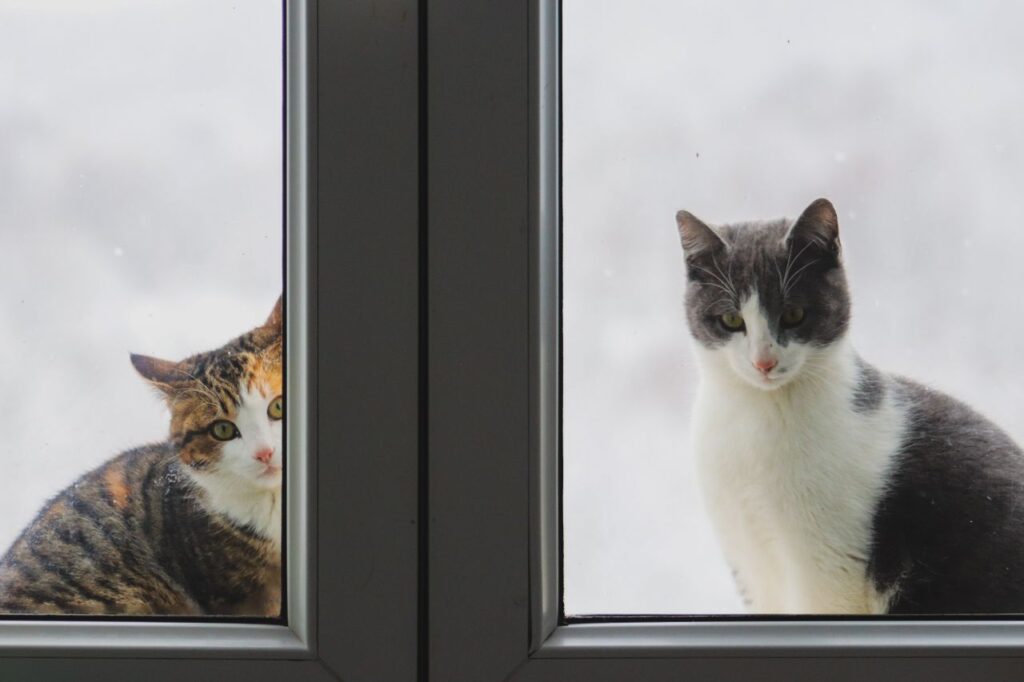
People often wonder how stray and feral cats make it through freezing weather. The short answer: they’re resourceful, but they struggle, and a little help saves lives.
How Cats Cope on Their Own
Cats grow a thicker coat in winter and instinctively seek insulated spots, under porches, in sheds and abandoned buildings, or inside dense brush, to escape wind and hold body heat. They also huddle together to share warmth, which is one reason colony cats fare better than solitary ones. Still, their fur isn’t enough in extreme cold, and freezing temperatures put them at real risk of hypothermia and frostbite.
How to Help
There are several things we can do to help stray cats survive the winter.
Provide an Insulated Shelter
The single most helpful thing you can do is offer a small, insulated, elevated shelter. A common, inexpensive design uses two nested plastic storage totes (or a Styrofoam cooler) with a roughly 6-inch entrance hole placed a few inches off the bottom, filling the gap between bins for insulation. Keep it raised off the cold ground and face the entrance away from the wind.
Critically, use straw for bedding, never hay, and never blankets or towels. This trips a lot of well-meaning people up: straw repels moisture and lets cats burrow in to stay warm, while hay, blankets, and towels absorb moisture, can freeze, and actually pull heat away from the cat. Mylar emergency blankets laid under the straw can add reflected warmth. Multiple small shelters hold heat better than one large one.
Food and Unfrozen Water
Cats burn more calories staying warm, so they need more food in winter. Set up weather-resistant feeding stations, and use deep plastic (not metal) bowls for water, refreshed often, since water freezes fast; heated bowls are ideal if you can manage one.
Winter Safety Cautions
Before starting your car, knock on the hood and check the wheel wells, since cats climb into warm engines and can be killed. Avoid antifreeze, road salt, and chemical deicers in areas cats can reach, as these are toxic when licked off paws; pet-safe deicers, sand, or gravel are safer alternatives.

Safety Concerns When Helping a Stray Cat
Helping a stray is a kind act that carries real risks. Cats with unknown histories can carry conditions transmissible to people or animals; rabies is the most serious, but strays may also carry parasites, ringworm, and bacterial infections. Cat scratches and bites in particular can cause serious infections, so avoid contact with saliva, wounds, and feces, and wash your hands thoroughly after handling a stray.
If a stray cat bites or deeply scratches you, wash the wound with soap and water for several minutes, apply antiseptic, and seek medical attention promptly even if it seems minor. Tell your provider the cat was a stray with unknown vaccination history so they can assess whether rabies treatment or antibiotics are needed; don’t wait for symptoms, since rabies is nearly always fatal once they appear but preventable when treated early. And always keep a found cat fully separated from your own pets, with its own litter box and supplies, until a vet has checked it.
Finding a stray cat, or just sharing your neighborhood with one, is a chance to do right by the animal and by any family that may be searching for it. And you’re not on your own: our community of pet lovers is ready to help. Post your found-pet alert, share it widely, and let’s get that cat where it belongs.
Frequently Asked Questions About Stray Cats
Should I Take a Stray Cat to the Vet?
If it appears injured or ill, yes. Many vets provide basic care for strays and most will scan for a microchip at no charge. You may be responsible for costs, though some shelters and rescues offer assistance for found animals.
What Should I Do if I Find a Stray Cat?
Start by figuring out whether the cat is friendly, fearful, or possibly feral, and whether it looks healthy or hurt. If it’s approachable, secure it safely and check for a collar tag, then have it scanned for a microchip at a vet or shelter. Provide water and a little food, file a found-pet report and post an alert (PawBoost makes this quick), and put up flyers near where you found it. If the cat seems injured, sick, or won’t let you near it, contact a local shelter, rescue, or TNR group for guidance rather than forcing contact.
Why Do Stray Cats Rub Against Your Legs?
When a cat winds around your legs and rubs its head or body against you, it’s depositing its scent from glands in its cheeks and flanks, a friendly, affiliative behavior that marks you as familiar and “safe.” It can also be a way of greeting you or asking for food or attention. A cat that rubs against you is showing it’s comfortable and socialized, which is a good sign it’s a lost or owned pet rather than a feral one.
How Can I Tell if a Stray Cat Is Pregnant?
Signs of pregnancy in a cat include a rounded, swollen belly (usually noticeable a few weeks in), enlarged and pinkened nipples (sometimes called “pinking up”), increased appetite, weight gain, and more affectionate or nesting-type behavior. That said, a swollen abdomen can also signal worms, illness, or simply a well-fed cat, so the only reliable way to confirm pregnancy is a veterinary exam, which may include palpation, ultrasound, or X-ray. If you suspect a stray is pregnant, a vet or rescue can advise on the best next steps.
Can Stray Cats Be Domesticated?
It depends on whether the cat is a stray or truly feral. A stray was once a pet, so it’s already socialized and can usually settle back into home life with patience. Feral cats are a different matter: adult ferals that never had positive human contact rarely become lap cats, and forcing one indoors causes it serious stress. Feral kittens, however, can often be socialized into pets if handled early, generally before they’re a few months old. The younger the kitten, the better the odds.
How Do You Catch a Stray Cat With Kittens?
Move carefully, because a mother cat (queen) with kittens can be especially defensive, and you don’t want to separate them. If the kittens are very young, the safest approach is usually to contain mother and babies together. For a friendly queen, you may be able to move the kittens into a carrier so she follows, but for a fearful or feral mother, a humane trap is the right tool, and you’ll want to trap her and collect the kittens as a unit. This is a situation where it’s well worth calling a local rescue or TNR group, since they have experience trapping mothers with litter and can help place them safely.
How Can You Tell the Age of a Stray Cat?
You can’t pin it down exactly without a vet, but there are clues. For kittens, teeth and size are good guides: eyes open around 1-2 weeks, baby teeth come in by a few weeks, and adult teeth replace them by around 4-6 months. In adult cats, vets estimate age from tooth wear and tartar, eye clarity, and coat and muscle condition, since older cats tend to show cloudier eyes, more dental wear, and bonier or less sleek bodies. A veterinary exam will give you the most reliable estimate.
Can Stray Cats Have Rabies?
Yes. Any unvaccinated mammal can carry rabies, and a stray cat with an unknown history could be infected, though it’s relatively uncommon in areas with good vaccination programs. This is exactly why you should never handle an aggressive or strangely behaving stray with bare hands. If a stray cat bites or deeply scratches you, wash the wound with soap and water for several minutes and seek medical care promptly, letting your provider know it was a stray with unknown vaccination status. Don’t wait for symptoms, since rabies is nearly always fatal once they appear but preventable when treated early.
Is Feeding Stray Cats Illegal?
In most places, no, but it’s not universal. Some cities and counties have local ordinances that restrict or ban feeding stray and feral cats, often on public property, so it’s worth checking your local rules. There’s also a separate consideration: in some jurisdictions, regularly feeding and caring for a cat can contribute to being legally considered its “owner” or “keeper,” which can carry responsibilities. Generally, simply offering food isn’t enough on its own to make a cat legally yours, but combined with sheltering and providing vet care it can be a factor. If you’re caring for community cats, connecting with a local TNR group can help you understand the rules where you live. This isn’t legal advice, so check your municipal code or animal control if you’re unsure.
Where Can I Get a Stray Cat Neutered for Free?
Free and low-cost spay/neuter options are widely available, though they vary by area. Good places to start: local TNR (Trap-Neuter-Return) programs, which often sterilize community cats for free or a small fee; the ASPCA and Humane Society, which run or list low-cost clinics; and national directories that help you search by ZIP code. Many municipal shelters also offer reduced-cost services for found and community cats. If you’re caring for an unowned outdoor cat, ask specifically about TNR programs, since these are designed exactly for that situation.
How Do You Keep Stray Cats Out of Your Yard Humanely?
Remove attractants (open trash, outdoor food, hiding spots), use scents cats dislike (citrus, vinegar, coffee grounds, rue), add texture barriers in garden beds, and try a motion-activated sprinkler or light. For unowned cats, supporting TNR is the lasting fix, since simply removing cats invites new ones to move in.