
View Lost Cats Near Alexandria, VA

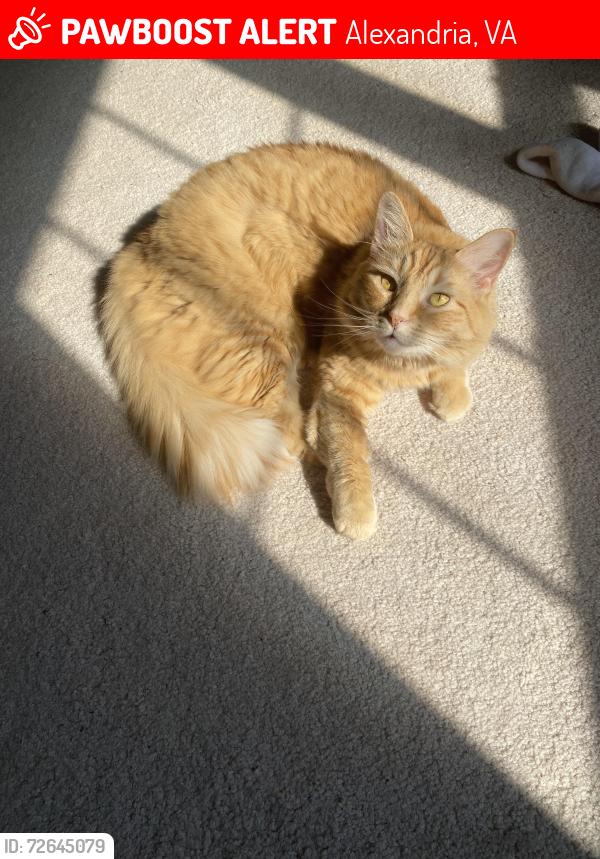
Phoebe is Missing in Alexandria, VA

Share on

Status

LOST

Date Last Seen

March 8, 2026

Location Last Seen

Alexandria, VA 22312

Nearest Landmark

Near eagle ridge lane

Name

Phoebe

Sex

Female

PawBoost ID

72645079

Species

Cat

Description

Long haired orange cat with fluffy tail

Message from Owner

We think our cat slipped out during a delivery this morning. She is an indoor cat and has never been outside. She will probably be scared and hiding!


Facebook Community Response

Morris J.
3 months ago
This cat was found in Hyattsville MD
Reply
Morris J.
3 months ago
o does she have micro chips?
Reply
Ri M.
3 months ago
Post on Nextdoor and Ring apps. Ask neighbors to check car hoods, garages and sheds immediately. Make sure to tap hoods of the car around. Keep an entryway open for cat to get in. Buy or loan a live cat trap from online stores or local tnr groups. Leave your garage open with cat to enter. Put some food and your clothing there for smell. Get a motion sensor camera to detect when cat is around your property
Reply
Tricia D.
3 months ago
STEPS FOR FINDING LOST CATS Step 1: The ABSOLUTE quickest and easiest way to find a lost indoor-only cat is to open the exit it escaped through for several days. Typically, the cat will return to the home on its own. If this is not possible, crack an attached garage door, enclosed porch, or window (providing something for the cat to step on). This is essentially using part of your home as a “trap”. Turn off the lights outside the house. Keep it as quiet as possible outside the home, especially at night. The key is to create an environment where the cat feels safe to return. Step 2: Put scent items outside the exit the cat escaped, or in the enclosed area you have cracked. Also, place scent items just outside the door of the “trap”. Cats have an amazing sense of smell, and the smell of home calms them and lures them back. Scent items can include (use as many as possible) litter box, slept on sheets/pillow case of owner, owner’s worn clothes/shoes, cat’s bedding, cat tree, and toys. Use items the cat is particularly attached to. Step 3: Post the cat on local lost and found pet sites. Include the cat’s identifying color, area lost (be specific with street name, neighborhood, city), and date last seen. This information helps others find your missing post through searchable keywords. Nextdoor and Pawboost are free and commonly used across the country. Neighborhood sites are also important. For local pet owners, post on Lost and Found Pets Hampton Roads. Step 4: Make sure to visit your local animal control in person. File a lost report and bring the shelter a flier. Find out if your report becomes inactive after a certain number of days, and make sure to update it as needed. Many pets find their way to the shelter months after becoming lost. Step 5: It is extremely important to use fliers for your area. In the case of an indoor-only cat, a flier should be on every door within a 7-house radius. You will need approximately 150 fliers. This is work, but highly effective. Input your address in Google search, and draw a map of a 7-house-length radius around your home. This is the area to blanket with fliers. Step 6: Physically searching for your cat can have some drawbacks. Walking the neighborhood calling can actually lure the kitty further from home, and also keep it more in hiding. Instead, it is best to call from the exit where the cat escaped. Make sure the calls are soft and familiar. The owner should be seated and have all lights outside turned off. This is less intimidating to the cat and makes it feel safe. We do not recommend doing this in the early morning hours, as this can keep the cat from returning home. Step 7: Should you search for your cat, make sure it is someone the cat is familiar with. A neighborhood search can also move the cat further from home and keep it in hiding. The cat needs time to settle down, and movement will continue the survival mode mindset. Search quietly and softly, looking under nearby sheds, open crawl spaces, decks, etc. At night, utilizing a flashlight to look for the cat’s eyes can be fruitful. Again, we do not recommend the search to be lengthy or during the early morning hours, as this can prevent kitty from simply returning on their own. Noises of people walking around and doors opening can actually spook the cat while it is on high alert. Step 8: Place a baby monitor outside the door the cat escaped, preferably a video monitor. This can allow you to hear your cat meowing or scratching at the door. You may also want to use a trail camera. If you should put food by the door your cat escaped, it is highly recommended to have a camera on the food to know what animal is coming to eat. If it is not your cat eating the food, then you will either want to remove the food altogether or trap the animal. Once you have your cat on camera eating, you will want to use a humane trap. Elaine Jones
Reply
Paxie W.
3 months ago
I am not an expert, but after ours went briefly missing I have a few tips to share. 🐈‍⬛✔️ Look in storm drains. Bend down and look, dont assume they can hear you calling for them. Even if you are next to it calling out, they may not hear. 🐈‍⬛✔️ Walk the surrounding areas during quite times of the day, especially in late at night and early mornings. Take treats to shake or cans of food to tap. Cats are most likely to be active and venturing out of hiding during those times. Cats are naturally more active during dusk and dawn, and may be less likely to be seen during the day. Additionally, many cats will attempt to return home within the first week, often in the middle of the night. 🐈‍⬛✔️ Don't put out their litter, but do put out a load of your laundry. Your baby knows your scent. Litter might attract territorial aggressive strays or ferals that might fight or chase away your baby. They won't care about your laundry though. 🐈‍⬛✔️ Tell your neighbors. Ask the delivery people, garbage & recycling people to keep an eye out. 🐈‍⬛✔️ Notify the microchip company and make sure they are still in their system 🐈‍⬛✔️ Use free online sources like Canva to make flyers to put up. 🐈‍⬛✔️ Contact the local shelters to alert them. They will check the pets that came in and will be on the look out for yours when new ones come in. They also have resources/suggestions, and can loan you traps. **if you use a trap, check it often as raccoons will injure trapped cats. Do not leave it alone over night. ⚠️ Set your alarm to wake up to check it 🐈‍⬛✔️ Contact the vets in the surrounding area. Someone might take your pet in to see if they have a chip. Leave your info with them just in case someone does. 🐈‍⬛✔️Reach out to local rescues to alert them. 🐈‍⬛✔️ Register them on websites like Petco Lost Love and PawBoost. One will create a flyer for you to print out and both can be used to share on social media. 🐈‍⬛✔️ Check out websites like 24PetConnection , nextdoor neighbors, and the shelters periodically to see if they have been listed as found. 🐈‍⬛✔️ Don't give up.
Reply
Carlene W.
3 months ago
🙏🙌🏼🙏
Reply

More Lost & Found Pets Near Alexandria, VA

More Lost Pets in Your Area
Pawboost White Dog Hero

JOIN THE

RESCUE

SQUAD

The Rescue Squad™ is a group of 7,594,431 pet lovers who have signed up for local lost & found pet alerts.

Join The Rescue Squad™

Contact Owner