
View Lost Cats Near Forest Lake, QLD

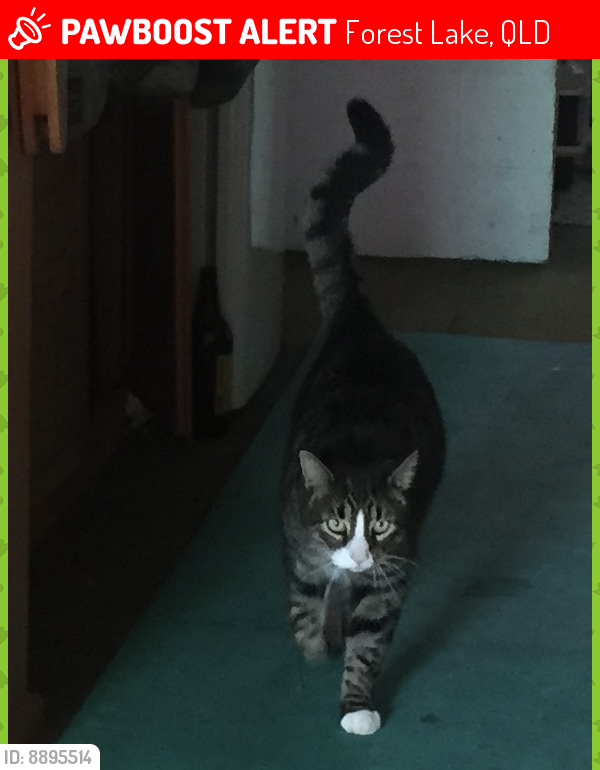
Sneaks is Missing in Forest Lake, QLD

Share on

Status

LOST

Date Last Seen

March 14, 2023

Location Last Seen

Forest Lake, QLD 4078

Nearest Landmark

Joffre Place, Forrest Lake

Name

Sneaks

Sex

Male

PawBoost ID

68895514

Species

Cat

Description

Lost grey tabby short hair 4 white socks white blaze on his nose. Sneaks is microchipped and a old man. Sneaks is a farm boy not use to the city. He is timid if he doesn't know you, but a kind slow approach and food will win him over. He was to fly back to us in Adelaide but appears they say escaped from an unsecure area. If anyone has any sighting or news we would appreciate it. Thank you

Message from Owner

N/A

Facebook Community Response

Cher Y.
3 years ago
I have notified Forest Lake Community Forum (Australia) https://www.facebook.com/groups/1583294078652383/permalink/3351868425128264/?mibextid=W9rl1R
Reply
Cher Y.
3 years ago
Please check contact details are correct on microchip and the status changed to “Lost/Stolen”. HOW TO UPDATE OR CHECK DETAILS ON YOUR PET'S MICROCHIP: How can I check my pet's microchip details if I know the microchip number? There are five Australia wide Pet Microchip databases called: 1. CENTRAL ANIMAL RECORDS (CAR). - CAR is Australia's largest pet microchip database with 4.2 million pets currently listed therefore if your pet is listed on another microchip database consider switching your pet’s microchip details to this database (excludes Victorian residents due to legislation including greyhounds living in Victoria). - Note: If you switch to CAR request the other microchip company de-register your pet from their records as you do not want duplicate records to update. 2. AUSTRALASIAN ANIMAL REGISTRY (AAR). 3. GLOBAL MICRO ANIMAL REGISTER. 4. HOMESAFE ID. 5. PETSAFE.. To find out which pet microchip database your pet is listed on click on the link below and enter your pet’s microchip number in the required field select “search”then accept the conditions: http://www.petaddress.com.au/ Once the microchip database name has been displayed click on the database name and then follow the instructions provided by the microchip company on how to view, update or request transfer of ownership on the microchip. If your pet is not listed on one of the above five Australia wide databases but is listed on another database then this means your pet is only listed on a state wide database which is not ideal as microchips on these databases are only viewable in the relevant state and not Australia wide so if your pet goes missing while travelling interstate and is found and scanned the microchip details will not be viewable so consider switching your pet to CAR (excludes Victorian residents due to legislation including greyhounds living in Victoria). What if I don't know my pet's microchip number? Take your pet to your local veterinarian who will scan your pet to obtain the microchip number if this is not already recorded on your pet’s veterinary account. ADDITIONAL INFORMATION FOR CENTRAL ANIMAL RECORDS: If your pet’s microchip number is listed on CENTRAL ANIMAL RECORDS (CAR). Enter the microchip number in the CAR microchip field in the link below. You will now need to create an account in order to view or update the microchip details by selecting “Click Here” at the bottom of the page. (Once you have registered you will receive a yearly email to check the details.) https://car.animalrecords.com.au/ CENTRAL ANIMAL RECORDS also has a handy app called “MY PET” available on both Apple & android.
Reply
Cher Y.
3 years ago
Check impounded/found register daily by clicking on the link below: https://www.rspcaqld.org.au/What-we-do/Find%20lost%20animals/Search%20Found%20Pets
Reply
Cher Y.
3 years ago
Check impounded register daily by clicking on the link below: https://www.awlqld.com.au/awlq-animals/lost-and-found/lost-pets/
Reply
Cher Y.
3 years ago
GETTING YOUR CAT HOME 1. Attracting your cat home: Leaving food, bedding, clothing and used litter tray outside to attract with the smell can also attract tom cats and strays and you risk making it harder for your cat to get home. ONLY DO THIS METHOD IF YOU ARE SUPERVISING AT ALL TIMES. Cats are territorial and when an indoor-only cat escapes outdoors, that cat is often hiding within the territory of another (outside) neighbourhood cat. Dirty cat litter can attract community “tom” cats (intact male cats) or other territorial neighbourhood cats and that scent could predispose them to want to defend their territory, drawing them into the area where a displaced cat is hiding in silence. These territorial cats are put into defense mode when they detect the pheromones from another cat’s urine and faeces, causing them to be ready to fight. These cats are then more likely to beat up and chase the lost (displaced) cat from his hiding place, making a recovery more difficult. However, using cat food (and a wildlife camera) will draw a territorial cat in also, but the scent of food will not likely trigger the same level of aggression / readiness to fight as urine and faeces would. You are better investing time and effort in conducting a physical search for your lost cat and using wildlife cameras or a humane trap than you are in putting out dirty cat litter. Don’t forget to leave an entry point for your cat in case your cat returns home by themselves. 2. Neighbours: Door knock your neighbours (also the block behind and across from you) and ask if you can check their backyard, sheds, garages and under their house while you are there. Cats often get stuck or locked in somewhere, so pay particular attention to people who have gone on holidays as a lot of cats get locked in places when people go away. If you live near bushland please search this area also. Bushland and long grass is extremely high risk for paralysis ticks and preventative treatments are not 100% effective. 3. How far will they stray: The temperament of the cat can indicate how far they will roam. A friendly, curious cat is likely to stray further than a timid cat. Outdoor cats can have a territory of a 5 house radius. So many cats are still found in their territory. 4. Night walks: Do a 2-5am walk around your neighbourhood with a torch calling your cat, rattling a treats container or take some en/warmed sardines. A cat in unfamiliar territory will stay HIDDEN and SILENT for much of the day and into the night. Even a cat that is locked in or stuck somewhere will keep quiet during the day. In some instances a cat trap with food can be very effective. You will need to check the trap frequently throughout the night so set that alarm! The importance of checking drains nightly. https://www.facebook.com/1217082434/posts/10224272548060827/?extid=57JImOv17NvhTxaL&d=n Borrowing or hiring a humane cat trap: If your cat is timid you can borrow or hire a humane cat trap and leave it in your yard or apartment complex with a blanket covering the trap roof, cardboard on the floor of the trap, water and food. Recent Success Stories (read comments): https://www.facebook.com/1217082434/posts/10224262394887004/?extid=ZCr7hZOxMPq5JzTC&d=n You could ask the RSPCA, a cat rescue organization or council if they have a cat trap you could borrow or you can hire cat traps from: KENNARDS HIRE https://www.facebook.com/KennardsHire/ 5. Let everyone know: Social media-Posters-Door Knock-Flyers. Post to local Facebook community groups and lost & found pages. Use whichever social media format you can to get the word out. Put posters up all over the neighbourhood, lamp posts, milk bars, supermarkets, local vets. Letter box drop flyers all over your neighbourhood. 6. Check with your local council: For their website or their Facebook page for found pets. Check daily and ask which pound they send found pets to. Physically go there each week to look for your cat - don’t rely on just making a phone call or viewing the website impounded register. 6. Check Gumtree & Trading Post: For lost and found pets and in your local paper. Also check the for sale posts as sadly some people do on-sell found pets! Upon return of your cat: If your cat iwears a collar with a tag and your number on it please ensure the collar is a Safety Release Collar only. If you haven't already done so, de and microchip your cat as soon as you get your cat back. Courtesy of: Lost Cats of Melbourne, Lost Pets of Melbourne, Lost Pets in the West. *Amended.
Reply
Amanda J.
3 years ago
Hope you find him soon
Reply
Kay W.
3 years ago
😱 Oh dear, this is an awful worry, I really hope he is found safe and well ASAP 🙏🙏
Reply
Helena E.
3 years ago
Sharing tips posted elsewhere SOME HELPFUL HINTS IN FINDING YOUR MISSING/LOST KITTIES Tip #1: Focus your efforts close to your cat’s last known location. A lost cat will typically stay within a 3-5 house radius from the home (assuming the home is the last known location). This is especially true of indoor cats that have gotten out, though indoor/outdoor cats will typically stay close to home as well. When they get out, indoor cats tend to be quiet and fearful, and to hunker down and not emerge, even to the sound of the owner’s voice. Search thoroughly any hiding places within your own home: under furniture, in closets, in drawers, on top of cabinets, in HVAC ducts or indoor crawlspaces. Search you and your immediate neighbors’ yards: in bushes and trees, under porches and decks, in high-walled courtyards, and in crawlspaces under houses. Check nearby garages, sheds, and abandoned buildings. Keep in mind your cat could be trapped somewhere, so check any nearby enclosed spaces she could have squeezed into. Tip #2: Search for your lost cat when the world is asleep. A scared or shy kitty will be more likely to reveal herself when all is quiet. This means late at night (10:30pm or later) or early in the morning (6:30am or earlier). Go out with a flashlight. You can take a few cans of cat food with you (the smellier the better). Stand out in the open and pop the cans, or shake her treat jar. Calling out for kitty has worked for some, while others say just using your normal speaking voice works better. With either option, keep your voice calm; a frantic tone is not likely to attract a frightened cat. If you have a normal feeding routine, repeat it while searching nearby areas. For example: If you feed her canned food at night, take a can of food and a s and walk around calling your kitty and tapping the can with the s. Searching when all is quiet has other advantages as well. Calling out with your voice, shaking a treat jar, or popping a can of food will all be better heard by your hiding cat. If you’re lucky, she will come running when she hears these familiar sounds. Tip #3: Use the power of scent to attract kitty back home. A cat’s nose is far stronger than a human’s. That’s why scent can be a powerful tool when searching for your lost cat. Put out kitty’s bedding and/or toys on your porch or in your backyard. Leave out an article of (unwashed) clothing that has been worn by her person. Put out smelly cat food or treats. A cat’s sense of smell is very strong and having familiar smells may help her find her way home. Tip #4: Set out food and water for your lost cat. This comes down to a basic survival needs. Eventually, your kitty will need to start looking for food and water (although keep in mind cats have been known to survive days without water or weeks without food). When it comes to food, the stinkier the better. Think sardines, tuna, or other types of foods with pungent aromas. Please note putting out food may attract unwanted animals scaring or possibly endangering your cat. Consider setting up a wildlife camera pointed at the food and water. This way, you can see if your cat has stopped by to eat, which is a strong clue she is probably hiding somewhere very close. Tip #5: Make a weather-proof outdoor shelter. You can make a weather-proof outdoor shelter using either a large plastic storage container or a large styrofoam cooler, with a hole cut out at one end as an entrance. This can attract your lost cat by serving as a safe hiding place. Keep it secured, in a location protected from the elements, such as a porch or under a deck. If you have a garage, you can leave the garage door cracked open and place it inside. In cold weather fill the shelter with lots of clean straw or shredded paper (not blankets, which retain moisture and cause hypothermia). In warmer weather use a cardboard box. Tip #6: Consider using a humane cat trap. You can ask animal control or local cat rescues if they have a humane cat trap you can borrow. This can be a good option for extremely shy or skittish kitties. If possible, consult with a local expert from animal control, a cat rescue, or a TNR (trap, neuter, release) program. Sometimes, they will even be willing to come help you with this process in person. Tip #7: Don’t give up! Too often a pet parent will assume their lost cat has been killed by a predator and give up the search. Contrary to popular belief, this is rarely the case! The more likely scenario is that your lost cat is terrified, hiding out somewhere nearby. We’ve seen cases where a cat has been missing for weeks or months, but is eventually found hiding just a short walk from home. So keep up the search!
Reply

More Lost & Found Pets Near Forest Lake, QLD

More Lost Pets in Your Area
Pawboost White Dog Hero

JOIN THE

RESCUE

SQUAD

The Rescue Squad™ is a group of 7,595,874 pet lovers who have signed up for local lost & found pet alerts.

Join The Rescue Squad™

Contact Owner