
View Lost Cats Near Santee, CA

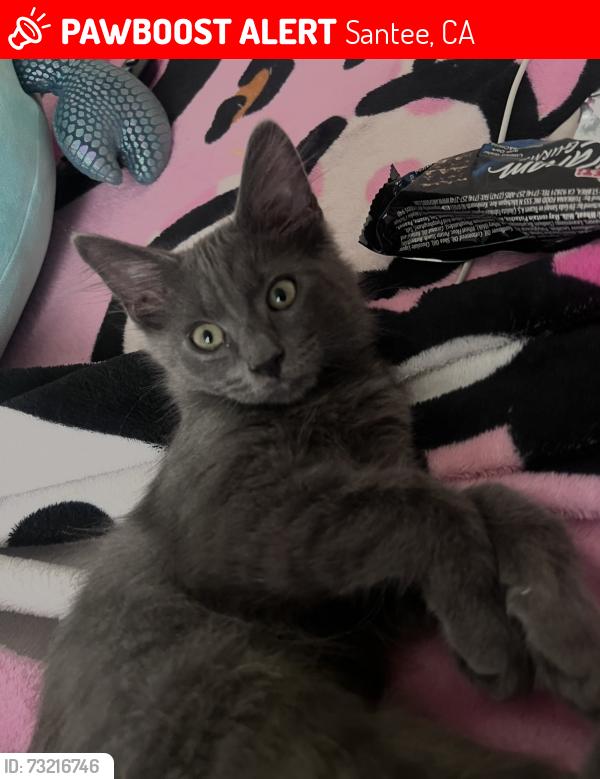
Jweism is Missing in Santee, CA

Share on

Status

LOST

Date Last Seen

August 2, 2026

Location Last Seen

Santee, CA 92071

Nearest Landmark

Rumson dr and amino dr

Name

Jweism

Sex

Male

PawBoost ID

73216746

Species

Cat

Description

short tail

Message from Owner

N/A

Comments on this Facebook alert

Laura E.
3 weeks ago
I saw this too but it was found in El Cajon so maybe someone picked it up in Santee and took it, dropping it in El Cajon? I hope if this isn't your cat you do find yours! đź©· https://www.facebook.com/1496918655/posts/10242688763584033/?mibextid=NOb6eG
Reply
Susie G.
3 weeks ago
shared ❤️
Reply
Linda D.
3 weeks ago
I think a kind person found your kitty. They posted if you scroll up. 🙏🏼🙏🏼🙏🏼
Reply
Ruth O.
3 weeks ago
Lost Cats‼️ Indoor only cats and limited outdoor access cats never go far. They go into survival mode and hide in silence. Most of them will not respond when they are in survival mode. 3 AM is the best time to find a missing indoor only cat. This is the time they become most active and responsive. Sit and quietly call for your kitty. Try to stay low, standing is intimidating to cats. Place some dirty socks and pillow cases outside. Your scent will attract your kitty. If you have a garage, place the items near the garage door and crack the door enough for her to get in. DO NOT leave food or litter box outside, it can attract predators and aggressive Tom cats. Because indoor only cats hide so well they are not as likely to be killed by a predator. Don't give up, it can take months to find a missing indoor only cat. Use a flashlight as late at night as you can to look in trees, under cars and in bushes. Try to look for the glow of her eyes. The best chance of you being reunited with your cat is to do a methodical search of the area. Most indoor only cats will be within 160 feet of your home. Survival mode lasts 5 to 14 days but can last longer. Once their hunger gets to a maximum they can snap out of it but this is a dangerous time because they come out of hiding. The majority of cats will try to make a break for home on the 5th night. In addition to posted flyers, make mini flyers and hand them out to your neighbors. Some people don't pay attention to posted flyers. It's VERY VERY important that you look for her as late at night as you can. If you have other cats, watch them. If they are spending a lot of time looking out a certain window, that’s a good indication the missing cat is in that area. Wildlife and motion activated cameras are also helpful. a lot of people are successful trapping their indoor only cats. If you decide to trap, you must watch the trap closely, predators can a cat in a trap.
Reply
Denise S.
3 weeks ago
What To Do If Your Indoor Cat Gets Outside For an indoor cat that has never traveled outdoors, it’s very scary to think about your cat going missing. Cats are naturally skittish by nature. So an indoor cat that gets lost outdoors, is typically terrified. And they don’t have the first clue where to go or what to do! Often times a cat’s curiosity will get the best of them. And that “open door” that looks too tempting to resist can equal disaster…after your indoor cat quickly finds themselves lost and all alone. Here are some helpful tips to follow if your indoor cat gets outside We hope by following these you can get them home sooner rather than later! Check The Outside Areas Around Your Home In A Calm Manner This one probably goes without saying. But if a cat find themselves outside, the first place you should think to look is in the bushes around your home (should you have any). Remember: even though it might have seemed like the best idea ever, you’re curious kitty probably realized it was a bold–not to mention dangerous–move once they did it! Your cat knows they are safest when they are with you. Even if they didn’t realize it until they found themselves outdoors. This is why retreating in the bushes where they are hidden from plain sight is the best place to start looking. Do your best to remain calm despite the alarming situation. Yelling or shouting their name or calling for them at the top of your lungs will only prove to scare your already frightened cat even more. Try your best to use the tone of voice you would normally. Just like if you were calling them as you would if they were inside your home. Important: In case you didn’t already know, cats are crepuscular creatures. This means that they are most active at dawn and at dusk. In the wild, this is when cats will do their hunting. Try searching for your cat during these times of the day to increase your chances of finding them. Get That Food Bag And Some Strong Smelling Canned/Wet Food You may attract all the cats in the neighborhood by doing this, but one of those cats just might be yours if you’re lucky! Get that food bag out and shake it, open a can of canned cat food (the fishier the better!) and start stirring it up outdoors while sweetly calling for your cat. Hopefully they are hungry and come running at the tempting aromas of their favorite food! Put Your Scent Outside — Hopefully This Will Help To Bring Your Indoor Cat Home Cats have a strong sense of smell. Take an article of clothing you’ve worn, or perhaps a blanket that you’ve used recently and set it outside. This scent may trigger him/her to come back home should they catch a whiff of it. Although controversial, another good idea is to set their litter box outside near the door. An indoor cat that is not familiar with the outdoors might be hesitant on doing her business outside without her usual privacy. It might seem like a long shot, but nothing is too out of the ordinary when it comes to getting your indoor cat back inside safely. Other argue this will attract unwanted critters. Perhaps it all depends on where you reside. Let Others Know Your Indoor Cat is Lost In the event that your indoor cat that has gotten out is not nearby, you’ll need to alert others in your area that your cat is lost. You can do this by posting signs around your area with a photo and detailed information about your cat. The next step would be to tell your neighbors who live on your street. Visit Your Local Shelters If your cat is microchipped, there is a much greater chance of them getting their happy ending with you. Any time a shelter receives a lost cat, they will scan for a microchip. (Vet offices also do this for animals that come into their care that are brought in.) Should your cat be chipped, you will be alerted via the contact info listed on their records. It’s always important to make sure that your cat has the correct and current information on their microchip record. If your cat is not microchipped, it’s still important to go in and check your shelters for your last cat. Most cats turned in have a short waiting period before they are deemed adoptable; you don’t want to miss your opportunity to reunite with your lost cat. Also, if your cat is microchipped, you can set an alert on their profile, allowing shelters and rescues to know that they are missing. This key step might help them to get home sooner should your indoor cat go missing. REMEMBER: ADOPT, DON’T SHOP; FOSTERING SAVES LIVES & SPAY AND NEUTER! https://coleandmarmalade.com/2019/01/31/what-to-do-if-indoor-cat-gets-outside/
Reply
Tranita B.
3 weeks ago
Shared ✝️🙏
Reply

Help this alert reach more local people Help more people see this pet

Share this Facebook post with nearby friends, neighborhood groups, or anyone who may recognize Jweism. The more people share and engage with it, the more Facebook will show it to others nearby.

Open Facebook PostOpen Post
Post link https://www.facebook.com/LostPetsElCajonCA/posts/1516850583817918
Pawboost White Dog Hero

JOIN THE

RESCUE

SQUAD

The Rescue Squad™ is a group of 7,664,507 pet lovers who have signed up for local lost & found pet alerts.

Join The Rescue Squad™

Contact Owner