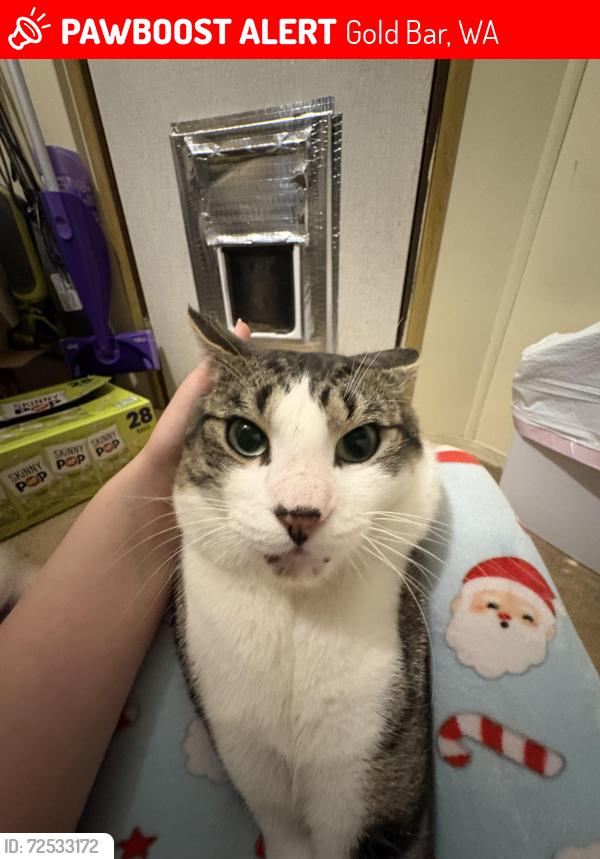

View Lost Cats Near Gold Bar, WA

Simba is Missing in Gold Bar, WA

Share on

Status

LOST

Date Last Seen

January 31, 2026

Location Last Seen

Gold Bar, WA 98251

Nearest Landmark

Wallace Falls State Park

Name

Simba

Sex

Male

PawBoost ID

72533172

Species

Cat

Description

American shorthair grey & white with black markings and a black tail tip

Message from Owner

Please find him. He is my ESA for anxiety. He is wearing a blue & black checkered vest. I love him very much. Thank you.

Facebook Community Response

Tammy D.
4 months ago
Boosting
Reply
Bobbie B.
4 months ago
It’s every pet parent’s nightmare: Your dog or cat has gotten loose and you don’t know where he or she is. Don’t panic—there are steps you can take to locate your pet. Swift action, coupled with major neighborhood networking, will increase the odds of having your furry friend back in your arms. The key is to get the word out to as many people in as many places as possible, so don’t be shy about enlisting the help of your friends and family in the search efforts. Remember, identification can be a lifesaver for a lost pet. It’s a good idea for all your animal companions—even indoor-only pets—to always wear a collar with an ID tag that includes your name, current phone number and any relevant contact information. If you’ve chosen to microchip your pet as a means of permanent identification, keep in mind that microchips are only as good as the information provided to the chip’s company. If you’ve moved or changed your phone number since registering your pet’s chip, be sure to submit an update as soon as possible. July 1 is National ID Your Pet Day, which serves as an annual check-in to make sure your pets’ identification information is up to date. If your pet does go missing, below are actions you can take to begin the search process. Search Your Home and Alert Neighbors As soon as you notice your pet is missing, talk to your family members or housemates and ask where they last saw your pet. Search your home carefully—under beds, in closets, dark places, small places, behind bulky furniture—in case your pet may be hiding or sleeping somewhere. Shaking a food dish, treat jar or favorite toy will sometimes lure animals out of a hiding place. If you are sure your pet is not in or around the home, take a slow ride or walk around your neighborhood. Bring along a recent photo of your pet and ask neighbors if they’ve seen him or her. Check under porches and shrubs, and ask neighbors to check in sheds and garages in case your pet was accidently locked in. Work the Phones Calls should be made to the local animal control agencies, veterinary hospitals, shelters (both municipal and private) and rescue groups in your area. One of them may already have your pet in custody. Check in with shelters daily—and pay these visits in person with photos of your pet to distribute to shelter staff. If there are no shelters close to your home, contact the police. Tell Your Social Media Networks Send an email about your lost pet to local friends, colleagues and family members and ask them to pass on the information to anyone they can. Then, be sure to share the news with your social media networks. Most communities have local “Lost Pet” Facebook pages where they will post information about missing pets. Reach out to those page administrators and see if they will share information about your pet. You can create your own Facebook page or digital card for your lost pet and share it across your social networks—and ask friends and family to spread the word to their contacts. Create a “Lost Pet” Flyer You’ll want to create a flyer that will stand out and get noticed by people who may have seen your pet. Repeated viewings of a consistent message are more likely to stick in people’s minds, so we recommend sticking with one design for your flyer. Start with a big, bold headline that people can read from a distance, like “LOST DOG” or “MISSING CAT.” Include a clearly printed, recent photo of your pet and list the breed, , coloring, age, weight, any distinguishing features and when and where he or she was last seen. Provide your name and two phone numbers: yours and a friend or family members in case you cannot be reached. Blanket the Neighborhood Good places to post your flyers include dog parks and runs, pet supply stores, pet grooming shops and veterinary offices. Various commercial establishments like grocery and convenience stores, gas stations, laundromats, bars, cafes and restaurants are other good high-traffic options. Cover lampposts and trees near where you think your pet was lost, and around busy commercial and pedestrian sections of town. Put up flyers around schools or at kids’-eye level. Children can be more observant than adults, especially when it comes to animals. Don’t Give Up! This one is important! Remember that many lost animals have found their way back home. Where to Report Found Animals If you’ve found a lost pet or stray animal in your area, contact your local shelter for guidance on the best steps to take. For those located in New York City, you can find more information on how to report a stray animal on NYC311. Residents of Los Angeles can reference the LA Animal Services website. When coming across stray kittens outdoors, be sure to review the ASPCA’s online resource about the best course of action to take to avoid unintentionally orphaning kittens who are being cared for by their mother.
Reply
Tia J.
4 months ago
Create a scent station (items with your/your cat’s smell - unwashed bedding, clothing, cat tower, etc. Especially important if cat is in new/unfamiliar area. Do NOT put out litter pan as feces often used to mark territory and may inadvertently attract predators or territorial cats.). Check it often, especially when things are quiet (late evening/early morning). Leave the garage door open 5” overnight. Check nearby Ring/security cameras in the area. Check in and under everything inside and outside with a flashlight. Cats don’t usually go far and freeze in a tight ball in very small, tight, dark areas when scared. The flashlight catches their eyes’ stare, especially at night. Thoroughly check inside your home, especially if this is a new/shy/scared pet. Post on NextDoor app as it covers your local neighborhoods. Be sure to check your local animal shelter in person at least every other day (can’t stress enough - in person!!! You know your pet best plus animals constantly brought in). If your cat is not spayed/neutered, may be why it is “lost” and traveling further. Hope your pet is home safe and soon. (Note: if anyone asks for money or a code as “they have your pet,” this is a scam). https://www.pawboost.com/blog/7-effective-search-tips-for-finding-your-lost-cat/ https://petfbi.org/i-lost-a-cat/tips-to-lure-a-cat-back-home-2/
Reply
Lana M.
4 months ago
*Keep trying what's listed....All the best in your beautiful cat's return,~💜💜 **Cats that get outside, they tend to panic & hide, usually close to home. When it's dark out, go outside with a flashlight or headlamp & look under every bush, vehicles anything they might go to for safety around your home. Watch for their Eyes to light up with the beam of the flashlight. Let neighbors know, they sometimes will get locked in an open shed & Put posters up. Leave out some bedding/clothing of theirs & yours, but NOT the litter box. Going out with a bag of treats OR whatever your cat loves to eat... calling their name. IF at all possible to leave a window or door open, when it's quiet many have come back. Continue looking & calling. The cat is scared & hiding & may have been chased. REPEAT, REPEAT, REPEAT If possible consider building a Catio - so much safer for kitties who like the sights/smells of outdoors. attached is one website to build, there are many - google or fb has many showing how to!
Reply

More Lost & Found Pets Near Gold Bar, WA

More Lost Pets in Your Area
Pawboost White Dog Hero

JOIN THE

RESCUE

SQUAD

The Rescue Squad™ is a group of 7,594,550 pet lovers who have signed up for local lost & found pet alerts.

Join The Rescue Squad™

Contact Owner