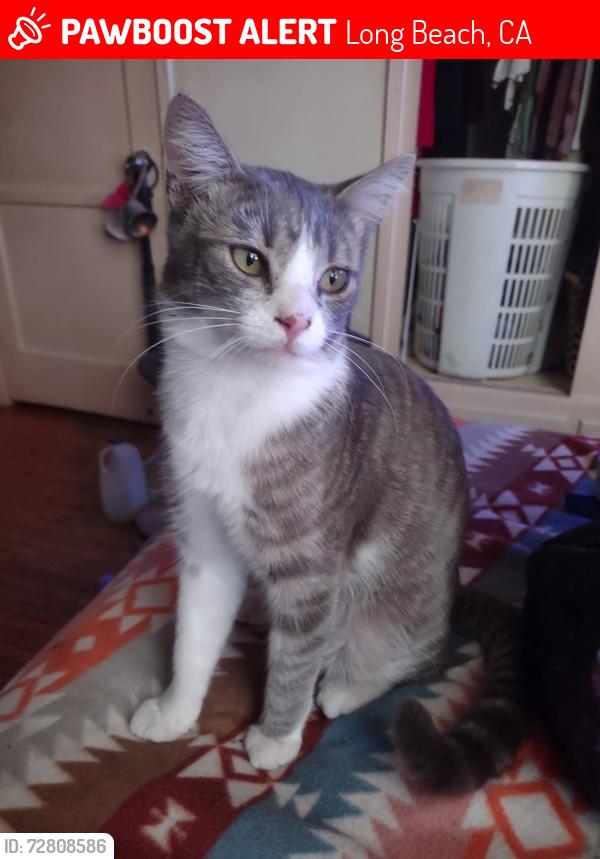

View Lost Cats Near Long Beach, CA

Rascal is Missing in Long Beach, CA

Share on

Status

LOST

Date Last Seen

April 23, 2026

Location Last Seen

Long Beach, CA 90814

Nearest Landmark

6th and Prospect near the thin strip of green belt.

Name

Rascal

Sex

Male

PawBoost ID

72808586

Species

Cat

Description

Great and white domestic shorthair

Message from Owner

PLEASE HELP US FIND RASCAL! ๐Ÿ™๐Ÿป Iโ€™m posting on behalf of my neighbor to help find her missing cat. This is Rascal: he is a 1-year-old male, grey, & white domestic shorthair. He lives on Quincy Ave in Belmont Heights and has been missing since 4/13/26. He was last seen near 6th St & Prospect as recently as yesterday. He weighs approximately 4 lbs. His microchip # is17011. This cat is very loved and incredibly missed. The owner is distraught without him. PLEASE help us bring Rascal ! ๐Ÿ™๐Ÿป If youโ€™ve seen him or have any information, please message me or comment below. Thank you so much for any help or information you can provide! ๐Ÿ™๐Ÿป

Facebook Community Response

Debbie H.
1 month ago
๐Ÿ™๐Ÿปโค๏ธ
Reply
Sheryl M.
1 month ago
Post neighborhood flyers, get out there walking around blocks calling cat. Take a flashlite and shake a treat container/ bag. Put something outfront of owners house w her sceant. Check animale control, Post on Next Door, have neighbors check garages, sheds.
Reply
Ing A.
1 month ago
๐Ÿ†˜๐Ÿ†˜๐Ÿ†˜๐Ÿ†˜๐Ÿ™๐Ÿ™๐Ÿ™
Reply
Lydia T.
1 month ago
Stressful! Please be open to many possibilities. Most 'lost' cats are hiding (or locked in / trapped, prevented from returning home), frightened (especially if chased or injured), possibly disoriented, within about 500 metres from where lost. (Less for indoor cats). Some cats fear making a noise, in case it attracts predators, so might not respond to your calls. They can squeeze into the tightest crevices (sometimes become wedged in), why very thorough searches are required. I am aware of 100's of situations where a cat was accidentally locked in / trapped somewhere (eg in a neighbours shed, garage, holiday home, roof, crawl-space under a home / industrial building). Most somehow survived (eg by eating insects), many others didn't. ๐Ÿ˜ž Please thoroughly search through sheds, garages, under houses / buildings, bats, decks, neighbours' bins, skips, under bushes, between tall walls and fences, in roof and wall cavities, on top of rooves, in trees, vacant homes / buildings (even neighbours on holidays), construction / storage areas, etc. One cat recently spotted hiding under neighbour's roof solar panels. Ask neighbours to check cctv cameras. Don't trust neighbours to search!!! (Or at least not as thoroughly as you. Some don't search at all). Best ask permission to search yourself, or go with neighbour. If neighbours are unco-operative, suggest you involve police to do a welfare check and to keep the peace. Alternatively, offer a reward (bribe) for unco-operative / uncaring neighbours. ๐Ÿ˜ž Call down drains (with strong smelling food). If you can lift the grate and enter the drain, even better. (One cat found 500 metres, another 3km away in drain!). And /or create a temporary, stable ramp (eg with rolled towels or a branch of wood) from inside to outside of the drain, with strong smelling food outside overnight. Dusk to 5am walks with strong smelling food (eg Whiskas sardines, salmon & meat flavours, or hot BBQ chicken), cat carrier and torch. When no cars: call calmly, stop, sit, listen, wait. Leave a door open if safe, with strong smelling food inside & out overnight, near exit point. Also, in / near other possible hiding places / where might be trapped. If food eaten, set up a sensor wildlife camera to ensure it is your cat. Next night, try waiting nearby with food and a carrier ... Or if safe, gradually (each night) move the food into your yard / home and close door from behind (while cat is eating). As a last resort (as lots can go wrong), place a humane cat trap on level ground, in a safe, discreet location. Google how to use safely, monitor closely. (Do not leave a trap unattended! Some people release distressed cats, or harm / / steal the trap with cat in it! Remain nearby). ๐Ÿ˜ž Put a towel over trap, to keep cat calm. Don't open until safe at home (or at vet). Posters with reward tacked high on telegraph poles / noticeboards, in plastic sleeve. Also, circulate leaflets (pay postman). Vets, pounds and animal welfare organisations, regularly with photo. If has escaped a new home (cats most likely to escape / become lost, within a month of a move): begin an intense, comprehensive search asap & leave food out / doors open, starting close to the new home, spreading outwards. Unpredictable what might do next: One cat travelled 26km to previous address, arrived 6 weeks after lost. Another found 500 metres away from where lost, 7 months later. Do all advised at old address, too ... Most cats need to be locked in for 3+ weeks to bond to a new home, otherwise sooner or later might try to head back to previous home / territory (& become lost, or worse). Many cats are escape artists until bonded to a new home! (eg breaking through mosquito netting and forcing sliding doors / windows open. Use dowell to limit opening to no more than 2cm). Spray bottle near door. Preferably not in a room with the door leading to outside. (Better a room, with a couple of doors closed , before reaching an exit door). Cannot stress enough, be extra vigilant !! New / timid cats & kittens are prone to hiding / getting stuck under / behind / in, furniture. So also check in / behind / under drawers, wardrobes, low lounges / beds, recliner chairs (don't move leg rest until double-checked), behind fridges, washing machines & dryers. (Always check inside before using, as cats have in these :-( ). Be extra careful moving furniture! Behind / under kitchen cupboards & rangehoods, or any other spaces. Do all of the above many times (in case your cat moves around). Track down where any vehicles (eg tradies / removalist vans) which puss might have entered: call the driver to ask where travelled to. Check cctv cameras & do all of the above there, too. ๐Ÿ˜ž ๐Ÿ™ Please consider keeping your precious cat indoors and / or invest in a very secure cat enclosure, or catio. (Research has found it adds 10+ years to average age of cats. Safer for cats and wildlife). As responsible adults, we curb children's freedom to keep them safe, similarly for cats :-( ๐Ÿ™ Update microchip details / ensure correct. Not all vets are aware: microchips can migrate! (One cat's microchip recently located in arm pit!). Ideally, vets to do an extra thorough, all over body scan. (Don't solely rely on microchip).๐Ÿ™ Be aware of dodgy scams or people offering to find, or claiming to have found, your cat. Seek independent evidence (eg ask for photos or distinguishing features, do reviews, etc & watch out for AI generated pics, using your cat pic), before providing personal details or money. Don't give up searching (some cats found weeks, months, years later) ... ๐Ÿ™
Reply
Lorelei L.
1 month ago
HOW TO FIND YOUR LOST CAT - โ€œIndoor/outdoor " cats never wander far from their home. When they get out, they go into survival mode and hide in SILENCE. Despite all attempts, they will NOT respond to you. Cats that get out will typically become afraid. When afraid, they will seek safe haven under a deck/house, an opened garage (keep your garage door opened a crack) or in a bush. Sadly they will not meow when called as meowing would give up their location to a predator. This behavior has nothing to do with whether the cat loves you, whether it recognized your voice, or whether it can smell you...it has everything to do with the fact that a frightened cat will hide in silence. You have the highest chance of finding your cat by conducting an aggressive, physical search of your yard and your neighborโ€™s yards. Late at night and EARLY in the morning (2 - 4 am) is the best time to find a missing "indoor only" cat. Don't give up! It can take WEEKS to find a missing "indoor only" cat. Use a flashlight late at night and look in trees, under cars and in bushes. Try to look for the glow of his eyes. While some cats may return within a few hours or days, others may take up to 10-12 days before they break their cover. Once their hunger and thirst gets to a maximum, they snap out of it but this is a dangerous time because they then come out of hiding and are at risk of predators. If possible, leave the door or window open from which they escaped. Make mini flyers and hand them out to your neighbors. Most people don't pay attention to posted flyers. It's very important that you continue to look for him EVERY night, as late as possible. Research shows that heโ€™s close by. Don't give up! Interestingly...The new evidence is to NOT leave the litter box out as it can attract aggressive cats or other predators which can displace the cat further from its home. Cat litter attracts predators. In fact, some coyote trappers use cat litter as bait. Ever wonder why cats bury their waste? They don't want to advertise their presence to predators! A litter box placed or sprinkled around the home may put your cat at risk of being ed by a predator before you can get him back in the house. There is no single trick to recovering a lost โ€œindoor onlyโ€ cat, but there are methods that are highly effective. Use ALL of them! Praying your kitty returns soon or is found safely. ๐Ÿ™๐Ÿ™๐Ÿ™๏ฟผ๐Ÿพโค๏ธ๐Ÿˆ even if your kitty is an outdoor cat a lot of these tips would still help.
Reply

More Lost & Found Pets Near Long Beach, CA

More Lost Pets in Your Area
Pawboost White Dog Hero

JOIN THE

RESCUE

SQUAD

The Rescue Squadโ„ข is a group of 7,595,145 pet lovers who have signed up for local lost & found pet alerts.

Join The Rescue Squadโ„ข

Contact Owner