
View Lost Dogs Near St Kilda, VIC

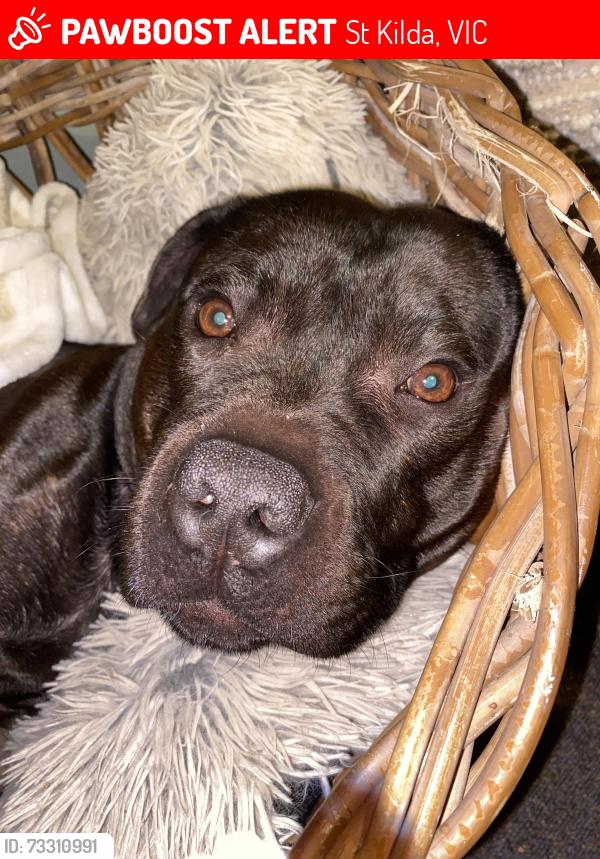
Cylus is Missing in St Kilda, VIC

Share on

Status

LOST

Date Last Seen

August 27, 2026

Location Last Seen

St Kilda, VIC 3182

Nearest Landmark

Lambeth place and Odessa st

Name

Cylus

Sex

Male

PawBoost ID

73310991

Microchip #

956000016599356

Species

Dog

Description

Brindle staffy with lost of caramel/chocolate in his coat

Message from Owner

Please help me find my baby and bring him home safely

Comments on this Facebook alert

Debbie M.
2 weeks ago
Dogs in Flight Mode (Also Known as Survival Mode): What It Is and How to Help When a dog goes missing and days pass without a single sighting, the worry can feel overwhelming. You might wonder: Why hasn’t anyone seen them? Why won’t they come when called? How can a beloved dog vanish into thin air? The answer often lies in something called flight mode—also known as survival mode—a powerful, involuntary response that helps dogs survive perceived danger. Understanding this state is essential if you want to bring a lost dog home safely. 🧠 What Is Flight Mode (aka Survival Mode)? Flight mode, sometimes referred to as survival mode, is not DISOBEDIENCE. It’s NOT POOR TRAINING It’s not that your dog doesn’t love you. It’s a neurobiological reaction to stress and fear, deeply wired into a dog’s nervous system. When a dog experiences something frightening—like storms, fireworks, being looked after , an accident, being rehomed, or even just getting lost—they may go into a state of extreme survival instinct. In this state, their body and brain prepare for one thing only: escape. They’re not “choosing” to run—they physically and mentally can’t do anything else. ⚡ What Happens Inside the Dog’s Brain? When fear kicks in, the amygdala (the brain’s fear centre) takes over. Within seconds: * Adrenaline surges, pushing blood to the muscles and speeding up breathing and heart rate. * Cortisol floods the system, keeping them in a hyper-alert state. * The part of the brain that handles logic, memory, and recognition gets suppressed. This means: * Your dog might not recognise your voice or even your face. * They likely won’t respond to their name, whistles, or familiar commands. * Instead of running to safety, they run from everything—even you. Even confident, well-trained dogs can enter flight/survival mode under stress. It’s instinct, not choice. 🚫 What Not to Do As humans, our first instinct is to call out, search the area, or try to chase a dog we’ve spotted. But for a dog in flight (or survival) mode, those actions feel like pressure or even threat. Avoid: * ❌ Shouting or calling (can sound like anger to a frightened dog) * ❌ Chasing or approaching directly (triggers escape reflex) * ❌ Bringing crowds of people to help search These can make the dog flee farther or into dangerous areas. ✅ What You Should Do If you believe a dog is in flight/survival mode, take a calm and strategic approach: 1. Stop having people actively search unless advised – Reduce human activity in the area. Don’t have anyone come to search. 2. Create a scent base – Leave unwashed clothing or bedding where the dog was last seen, collect some of your wee and pour it around this spot or onto some wood. 3. Set up a quiet feeding station – Offer food and water in a low-traffic spot. If you see them don’t call out or move just stop, sit down turn side on or have your back to them & avoid eye contact. 4. Use trail cameras – These help track the dog’s movements without human interference. 5. Log all sightings immediately – Include time, location, direction of travel, and behaviour. 6. Stay consistent – Changing tactics too often can disrupt progress. Small amount of food out late evening and checked early morning, ( don’t put a lot out as you want them to keep coming back instead of being full and staying away ) Patience is key. If sighted - stop where you are and sit down, do not call out or approach, don’t call their name,instead say good girl/boy …. ( what ever their name is). Say words or phrases you use at home that gets them excited or happy and avoid direct eye contact. ⏳ How Long Can It Last? Some dogs calm down within hours. Others, especially rescues or dogs with trauma histories, can remain in flight/survival mode for days or even weeks. Over time, most dogs begin to relax when: * They’re no longer being pursued * A consistent food source appears * They feel safe and undisturbed * Familiar scents start to reappear That’s when recovery becomes possible—through either a slow reintroduction or a humane trap.
Reply
Debbie M.
2 weeks ago
‼️PLEASE READ ENTIRELY‼️ Contact all local veterinary clinics in and surrounding the area your dog was lost. Was your dog lost from home? - If yes, have you placed a “LOST DOG” sign on your front fence? - If yes, leave your dog’s bed in the front yard along with an item of your clothing. (The reason for this is to help your dog scent their way back home, if able). Have you door knocked all the neighbours surrounding the area your dog was lost? (Dogs have been found hiding in backyards, under houses and in bushland at the back of.neighbours properties.) Have you searched under bridges and in drains? Dogs have been found trapped under bridges and have fallen in drains unable to get back out. (A little dog last week fell down a drain and after the owner read my recommendations she checked the drains surrounding her home and found her dog trapped in the drain. The owner was extremely grateful for this advice.) ‼️ IMPORTANT‼️ Was your dog lost near bushland/state forests/reserves/parks/rivers/creeks? If yes, please search these areas for your darling dog. Take some food (try hot chicken). Dogs are often lost, hiding or trapped in parkland/bushland surrounding the area they were lost. They can get caught in heavy vegetation, collars and harnesses can get caught on branches or fences, leads can get caught in vegetation on the ground or they can fall down embankments and are unable to climb back out. Ten dogs recently lost: - dog found trapped in a lantana filled gully unable to move. - dog trapped in a dry river bed. - dog trapped in a riverbed with water. - dog had fallen down a steep embankment unable to climb out. - dog trapped in thick bushland. - dog hiding in a reserve. - two dogs found entangled in vines. - two dogs trapped in mangroves. When dogs are lost, hiding or trapped n bushland searching is the only way dogs are found otherwise they would not have survived. The majority of searches took between 27 - 72 hours to find their dogs however some searches took up to 10 days to find their dog in the bushland. WARNING: Bushland and long grass is extremely high risk for paralysis ticks. Tick Preventative not 100% effective. Paralysis ticks sit and wait on the end of overgrown or longer grasses for movement to attach to your dog or cat! Paralysis ticks can attach anywhere on your dog’s or cat’s body and can hide in areas you may not be able to see clearly, such as deep inside your dog’s or cat’s ear, between toes, inside the mouth. Check your dogs throughly when found. If sighted DO NOT CALL OUT OR CHASE your dog, instead SIT ON THE GROUND or CROUCH DOWN, hold out food/treats (if available), MAKE NO SUDDEN MOVEMENTS, wait for your dog to approach you then try to secure your dog. Your dog could currently be in “flight mode” which means they will not initially recognize you if sighted and it will require patience to rescue.
Reply

Help this alert reach more local people Help more people see this pet

Share this Facebook post with nearby friends, neighborhood groups, or anyone who may recognize Cylus. The more people share and engage with it, the more Facebook will show it to others nearby.

Open Facebook PostOpen Post
Post link https://www.facebook.com/LostPetsMelbourneVIC/posts/1480173384144610
Pawboost White Dog Hero

JOIN THE

RESCUE

SQUAD

The Rescue Squad™ is a group of 7,674,189 pet lovers who have signed up for local lost & found pet alerts.

Join The Rescue Squad™

Contact Owner